
Steel Billet · Size
100×100 mm Steel Billet
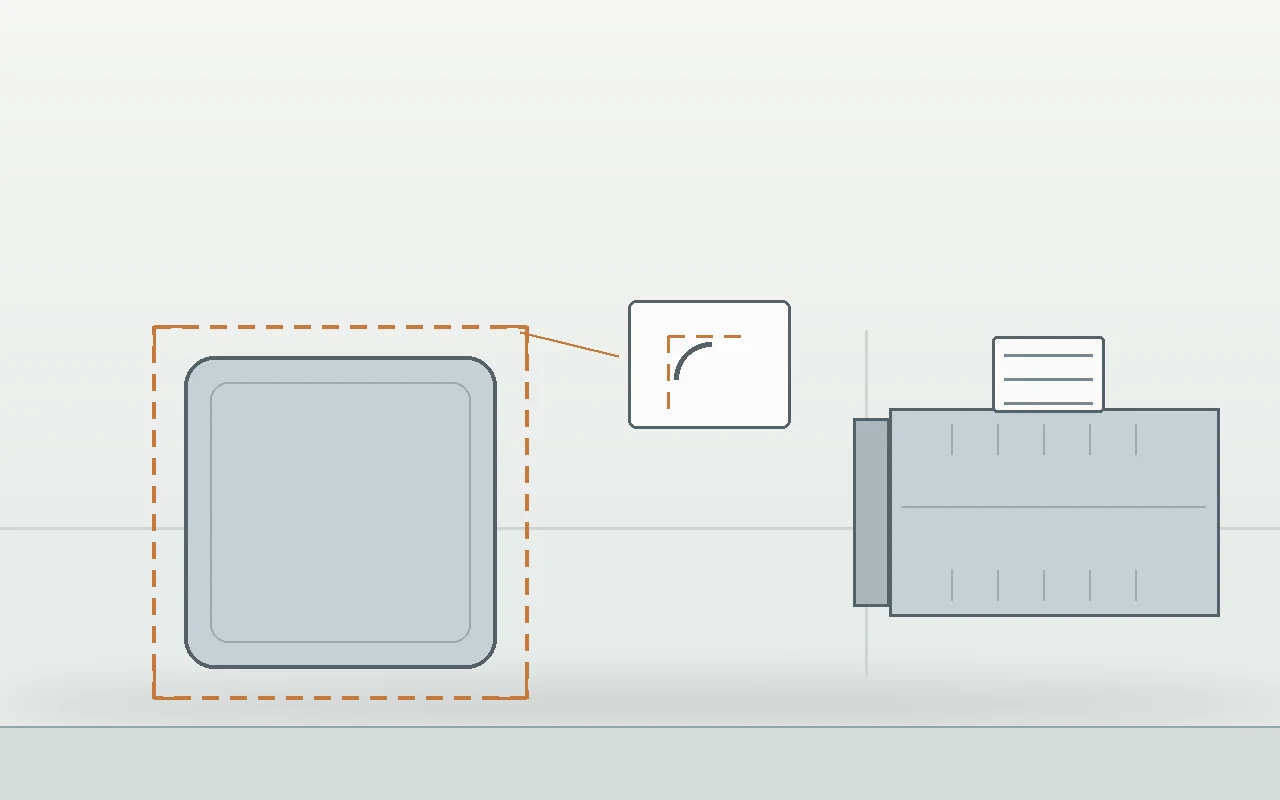
Treat 100×100 mm as the nominal square cross-section, then agree side limits, corner geometry, straightness and length with the receiving mill. Select the grade and quality plan independently of the size.
Nominal square size does not establish actual area, grade, stock availability or a universal tolerance. Rounded corners and actual dimensions affect mass.
State these before the order
- The agreed upper and lower side limits, and where they are measured.
- The corner geometry and shape limits, not assumed sharp corners.
- The straightness limits that apply to the delivered length.
- The usable cut length and the receiving-equipment envelope.
- The grade and quality plan released on a separate schedule.
Qualify the charge
Decide whether this is the right billet route
The charge section decides what the mill has to accept. Each row names the decision, why it matters at this stage, and what you must be able to state before the order is released.
| Decision | Why it matters here | Before you enquire |
|---|---|---|
| 100 mm charge required | Nominal size leaves shape variation open. | Attach the mill's complete receiving envelope. |
| Mass estimate needed | Ideal square geometry ignores corner and size variation. | Use agreed actual geometry and density. |
| Larger size offered | A section change affects the charge plan. | Obtain mill approval before substitution. |
Explore the full steel-billet range
Compare 130×130 mm billet
A larger charge section needs receiving-mill approval.
Review square-billet requirements
Resolve the full square-billet geometry and quality schedule.
Enquiry builder
100×100 mm Steel Billet — enquiry builder
Capture the decisions below, prepare a review summary and copy it to the billet RFQ. Approve the full 100×100 mm billet envelope and measured-mass basis before order release.
2. Review summary
This builder prepares your enquiry locally. Nothing is submitted from this page, and no personal data is collected here — the steel-billet RFQ owns contact collection.
Approve the full 100×100 mm billet envelope and measured-mass basis before order release.
Acceptance basis
Put the acceptance basis on the order
Nominal square size does not establish actual area, grade, stock availability or a universal tolerance. Rounded corners and actual dimensions affect mass. Each row names the applicability limit, the evidence to request and the action that closes it.
| Specification decision | Applicability and limit | Evidence to request | RFQ action |
|---|---|---|---|
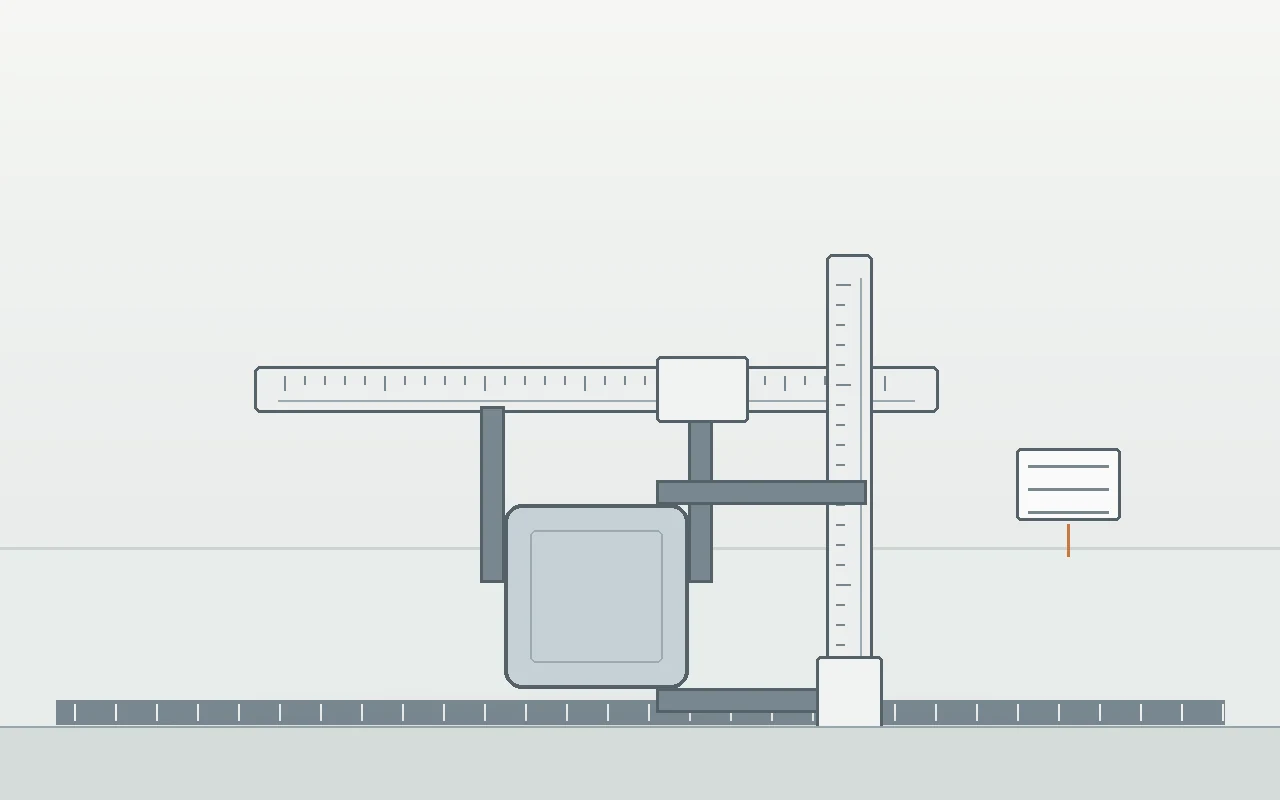
| Side dimensions | 100 mm is nominal on each side. | Agreed upper/lower limits and measurement method. | Specify where and how each side is measured. |
| Shape and corners | Rhomboidity, corner form and straightness are separate controls. | Approved shape schedule and actual checks. | Agree limits rather than assuming sharp corners. |
| Length and mass | Usable length differs from unspecified cut length. | Cut-end schedule and agreed weighing basis. | State length limits and payable quantity basis. |
| Ideal reference | Value | Limit |
|---|---|---|
| Sharp-corner area | 100 × 100 = 10,000 mm² | Nominal geometry only. |
| Volume per metre | 0.010 m³/m | Ignores corner rounding and actual side variation. |
| Theoretical mass per metre | 0.010 × agreed density in kg/m³ | No density or invoicing mass is assumed. |
Actual section geometry, length and agreed density govern any estimate. Verify weighed mass under the contract.
Documents & inspection
Documents that support 100×100 mm steel billet
Record both side dimensions and the agreed shape checks. Keep billet size inspection separate from heat chemistry and internal-quality acceptance.
| Control | What to examine | When and limits | Next action |
|---|---|---|---|
| Side dimensions | Agreed upper/lower limits and measurement method. | Before material acceptance; confirm feasibility and cost at quotation. | Specify where and how each side is measured. |
| Shape and corners | Approved shape schedule and actual checks. | Before material acceptance; confirm feasibility and cost at quotation. | Agree limits rather than assuming sharp corners. |
| Length and mass | Cut-end schedule and agreed weighing basis. | Before material acceptance; confirm feasibility and cost at quotation. | State length limits and payable quantity basis. |
| Heat and item identity | Mill test certificate linked to heat markings and packing list. | Before release and again on receipt; a sample certificate is not evidence for the shipped heat. | Request traceability through cutting, bundling and delivery. |
Application paths
Follow the operating duty to the right specification
The drawing and service envelope govern acceptance. These paths address different purchasing decisions; an application label does not approve a material.
Small-section mill input
Confirm the nominal size fits the approved charge schedule.
steel billet for section rollingRebar-production input
Use only the grade and section accepted by the rebar mill.
steel billet for rebar productionRolling-mill handling
Check furnace, guides and receiving limits before purchase.
steel billet for rolling mills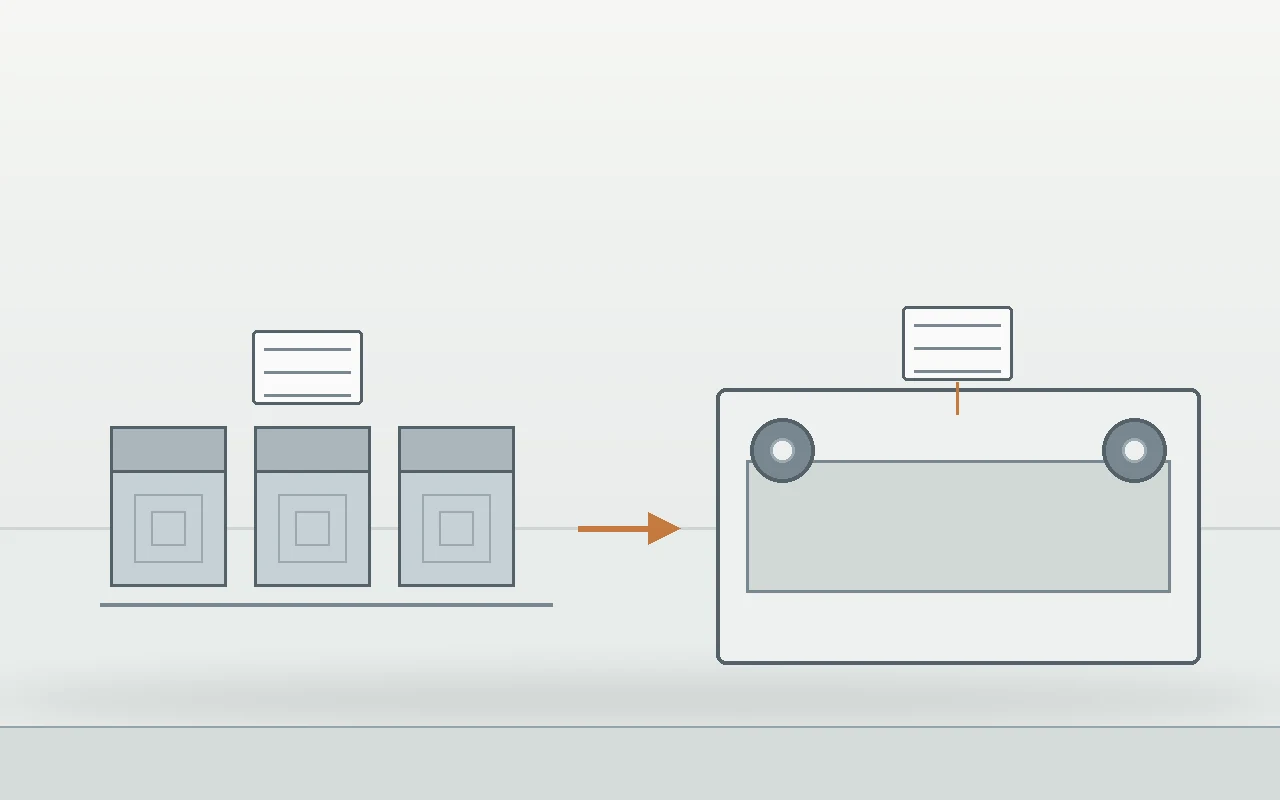
GCC markets
Plan the GCC destination around 100×100 mm steel billet
Use the destination to close the quotation scope, then confirm feasibility and commercial terms in writing. Country flags identify the destination; quotation must confirm the supply route, origin and availability for this order.
 United Arab Emirates
Put nominal size, actual acceptance limits and usable lengths on destination schedules. Identify the emirate, fabricator or site address and unloading restrictions; distinguish a domestic handover from an import leg.
steel billet supplier UAE Saudi Arabia
Put nominal size, actual acceptance limits and usable lengths on destination schedules. Name the consignee, importer and final site; ask who confirms product classification and border documentation before dispatch.
steel billet supplier Saudi Arabia Qatar
QatarPut nominal size, actual acceptance limits and usable lengths on destination schedules. State the nominated receiving point and project document approver; align certificate review with the required arrival window.
steel billet supplier Qatar Oman
OmanPut nominal size, actual acceptance limits and usable lengths on destination schedules. Specify the actual port, border point or inland site requested; separate the entry leg from onward transport and unloading.
steel billet supplier Oman Kuwait
Put nominal size, actual acceptance limits and usable lengths on destination schedules. Identify the contractor or fabrication yard receiving the billets; agree import-document responsibility and the named delivery place.
steel billet supplier Kuwait Bahrain
Put nominal size, actual acceptance limits and usable lengths on destination schedules. Confirm whether the order is for local consumption or onward shipment; name the consignee and agree who handles each transport leg.
steel billet supplier BahrainCommercial scope
Compare offers on the same delivered scope
State pieces, length and mass basis separately. Compare usable delivered material after any agreed conditioning or end removal, rather than relying on ideal square mass.
Ask the supplier for
- The side limits offered against the nominal 100 mm section.
- The shape, corner and straightness schedule that applies.
- The usable cut length and the cut-end condition.
- The offered mill and origin.
- Commercial validity and stated exclusions.
State on the enquiry
- Whether the quantity is priced by pieces, length or mass.
- The payable quantity basis and the agreed weighing method.
- The Incoterm rule with its named place and edition.
- Who unloads at the receiving point.
- The requested delivery window.
Ask for the offered mill and origin, billet schedule, quantity basis, processing scope, packing, commercial validity and exclusions. State the Incoterm with its named place and edition, who unloads, and the requested delivery window. Price, availability, production allocation, transport feasibility and dates require written confirmation.
Align billet identification, bundle protection and transport documents with the named delivery place before dispatch.
Related decisions
Resolve the remaining specification decisions
Close geometry and mass-basis decisions before comparing quotations.
Set dimension and shape limits
Agree the complete measurement and tolerance schedule.
Estimate billet mass
Use explicit geometry and density assumptions.
Expert insight
Expert Insight: Can a chemistry reference set the charge envelope?
A chemistry framework such as SAE J403 does not define this nominal square's receiving envelope.
Buyer implication: Release geometry and grade on separate order schedules.
Method: Review of the primary publisher's public scope; procurement implications are editorial analysis. Applicability: Chemistry-reference boundary. Limit: The ideal geometry table is arithmetic, not a standard tolerance or mill mass table.
SAE J403_202402 public scope · Information reviewed 2026-10-16.
Evidence boundary
- Method and scope cited from the primary publisher.
- No tolerance or mechanical value is stated on this page.
- The ideal table is labelled arithmetic, not a mill mass table.
- No density, certificate or test report is asserted as held.
Acceptance controls
Make acceptance easier to demonstrate
Three controls carry the 100 mm charge decision. Each names the evidence to request and the action that closes it.
Side dimensions
Agreed upper/lower limits and measurement method.
Specify where and how each side is measured.
Shape and corners
Approved shape schedule and actual checks.
Agree limits rather than assuming sharp corners.
Length and mass
Cut-end schedule and agreed weighing basis.
State length limits and payable quantity basis.
From specification to receipt
Close each decision before releasing the order
Four stages carry the order from engineering release to receipt. Each names the owner, the required input, the evidence produced and the risk if the item stays open.
| Stage and owner | Required input | Evidence or output | Risk and next action |
|---|---|---|---|
| Engineering release — Buyer's design authority | Mill releases the complete 100 mm charge envelope. | Approved specification and drawing revision | Unapproved substitution can change the design basis. Close the item before proceeding. |
| Offer review — Buyer and quotation team | Buyer agrees geometry, usable length and mass basis. | Written technical exceptions and commercial scope | An unlisted exception can survive into the purchase order. Close the item before proceeding. |
| Material release — Mill, inspector and buyer as agreed | Inspector records dimensions against the approved schedule. | Accepted documents linked to the order items | Missing heat identity can make an otherwise correct billet unacceptable. Close the item before proceeding. |
| Receipt and reconciliation — Receiving team | Receiver reconciles pieces, heat identity and weighed delivery. | Delivery record, item count and discrepancy record | Record any mismatch before the material is incorporated into work. Close the item before proceeding. |
Questions before ordering
Questions before you place the billet order
Four questions that decide whether a nominal 100×100 mm offer is comparable.
Are the corners assumed sharp?
Only in the labelled ideal geometry reference, not in delivered acceptance.
Is a standard tolerance included?
No. Agree the applicable limits and measuring method.
Is a fixed kg/m value promised?
No. Density and actual geometry are not assumed.
Can 130 mm be substituted?
Only after the mill approves the revised charge.
Enquiry handoff
Turn this requirement into a reviewable enquiry
Approve the full 100×100 mm billet envelope and measured-mass basis before order release. Include the completed fields and the controlling drawing revision so exceptions can be returned against the right requirement.
Prepare and copy the summary above, then open the steel-billet RFQ and paste it into Product Requirement. Add your name, company and reply email on that form. Supporting drawings can be shared through the destination's verified contact process.
Prepared locallyThis page prepares your enquiry in your browser.
Not submittedOpening the RFQ does not submit it.
AcknowledgedA submission is complete only when the receiving form returns a genuine acknowledgement.