
01Thickness
Thickness changes the order
The cited 100 × 100 mm equal-angle entries are 12.2 kg/m at 8 mm thickness and 15 kg/m at 10 mm. "100 angle" is therefore incomplete. Keep thickness in the item description and get approval before changing it.
Technical resource · Dimensional reference
Identify an angle by both leg dimensions and thickness, then retain its equal or unequal form and connection orientation. Use the verified entries below to estimate theoretical mass and prepare a precise enquiry without inferring capacity from size alone.
This compact reference covers selected producer entries, not all available sizes or a structural-capacity range. A single-angle table is not a back-to-back pair table, and mass does not establish member resistance.
Working technical tool
Select one of the verified reference entries. This is a compact reference set, not a catalogue of available stock. Unlisted sizes require a producer table; do not interpolate.
Mass per metre is read from the cited producer entry — never derived from a sharp-corner area approximation.
Choose a reference entry, positive length and whole number of pieces.
The selected designation, dimensions, length and piece quantity populate the enquiry fields below. Grade and service approval remain separate.
Reference output
No reference result yet. The estimate applies a tabulated nominal mass per metre to the length and piece count you enter — it is a planning quantity, not a shipment weight.
No allowance for tolerances, coating, holes, cutting waste or packing. Not a capacity check and not a measured shipment mass.
Complete the angle enquiry after the reference lookup
The calculator transfers the selected designation and theoretical quantity into the enquiry. Add grade, tolerances, hole requirements and service before copying the final summary.
Complete the specification to prepare a review summary.
0 of 14 required fields completed.
Check angle form, thickness, connected-leg orientation and grade against the approved drawing. Nominal mass is neither capacity nor measured shipment mass.
The specification you prepared is attached exactly as you entered it — both legs, thickness, grade, standard edition, connected-leg orientation, quantity basis, destination and required documents. Unresolved items travel with it as open questions rather than being resolved on your behalf.
Price on request. A specification review is the first step — it is not a priced quotation, and no availability is confirmed at this stage.
Method, formula and data conditions
Use the exact producer entry for the angle's leg dimensions and thickness. What the formula returns is arithmetic; what the result means for a member is a separate question.
Total theoretical mass (kg) = nominal mass (kg/m) × piece length (m) × number of pieces. Every numeric field on this page carries its unit explicitly — metric throughout, and no value is converted silently.
mass (kg) = kg/m × m × pieces
The lookup uses the published nominal mass rather than a sharp-corner area approximation, which would understate the section.
Reference entries checked ; a separate table revision date was not exposed.
These nominal values do not state availability or material compliance for any order.
Request a QuoteVerified reference entries
Nominal values below come from the linked ArcelorMittal tables, checked 2026-10-15. Use the full producer drawing for radii and details and the governing standard for acceptance.
| Specification decision | Applicability and limit | Evidence to request | RFQ action |
|---|---|---|---|
| Legs and thickness | One leg dimension cannot identify the ordered angle. | Exact producer table and approved detail drawing. | State both legs, thickness and equal/unequal form. |
| Connection and member form | Single, paired and differently connected members need their own design checks. | Connection drawing, holes and member arrangement. | State connected leg, orientation and pair details if applicable. |
| Grade and mass basis | Geometry and nominal kg/m do not establish material or capacity. | Material certificate, tolerance basis and agreed measurement method. | Add full grade, condition, lengths and commercial quantity basis. |
| Designation | Legs (mm) | Thickness (mm) | Nominal kg/m | Order implication |
|---|---|---|---|---|
| L 50x50x5 | 50 × 50 | 5 | 3.77 | Equal legs; retain thickness. |
| L 75x75x6 | 75 × 75 | 6 | 6.85 | Confirm actual offered profile and tolerances. |
| L 100x100x8 | 100 × 100 | 8 | 12.2 | Not the same order as the 10 mm entry. |
| L 100x100x10 | 100 × 100 | 10 | 15 | Design approval required for thickness substitution. |
| L 100x65x7 | 100 × 65 | 7 | 8.77 | Unequal legs; specify connection orientation. |
| L 150x100x10 | 150 × 100 | 10 | 19 | Retain full designation and connected leg. |
Sources: ArcelorMittal Orange Book equal angles node/220 and unequal angles node/225, linked in the method section. Values are nominal reference data, not availability or a delivered-mass guarantee.
Procurement-grade worked checks
Each check shows the entry, the arithmetic and the decision it changes. The values are the producer entries tabulated on this page — none of them establishes stock, capacity or a material grade.
The cited 100 × 100 mm equal-angle entries are 12.2 kg/m at 8 mm thickness and 15 kg/m at 10 mm. "100 angle" is therefore incomplete. Keep thickness in the item description and get approval before changing it.
Twenty L 50x50x5 pieces at 6 m give 3.77 kg/m × 6 m × 20 = 452.4 kg. Confirm the producer reference, commercial quantity basis and delivered piece count before acceptance.
An L 100x65x7 entry identifies geometry, but not which leg is connected or where holes sit. Add the drawing's orientation and hole pattern; do not infer connection performance from the mass.
A theoretical total is an arithmetic result, not a commercial quantity. Ask whether pricing and dispatch use pieces, theoretical mass or measured mass before you compare two offers for the same angle.
Documents and acceptance
Reject missing thicknesses, mixed mm/m units and substitutions based on mass alone. Keep single-angle and built-up-member data distinct and request a verified producer entry for unlisted sizes.
| Control | What to examine | When and limits | Next action |
|---|---|---|---|
| Legs and thickness | Exact producer table and approved detail drawing. | Before material acceptance; confirm feasibility and cost at quotation. | State both legs, thickness and equal/unequal form. |
| Connection and member form | Connection drawing, holes and member arrangement. | Before material acceptance; confirm feasibility and cost at quotation. | State connected leg, orientation and pair details if applicable. |
| Grade and mass basis | Material certificate, tolerance basis and agreed measurement method. | Before material acceptance; confirm feasibility and cost at quotation. | Add full grade, condition, lengths and commercial quantity basis. |
| Heat and item identity | Mill test certificate linked to heat markings and packing list. | Before release and again on receipt; a sample certificate is not evidence for the shipped heat. | Request traceability through cutting, bundling and delivery. |
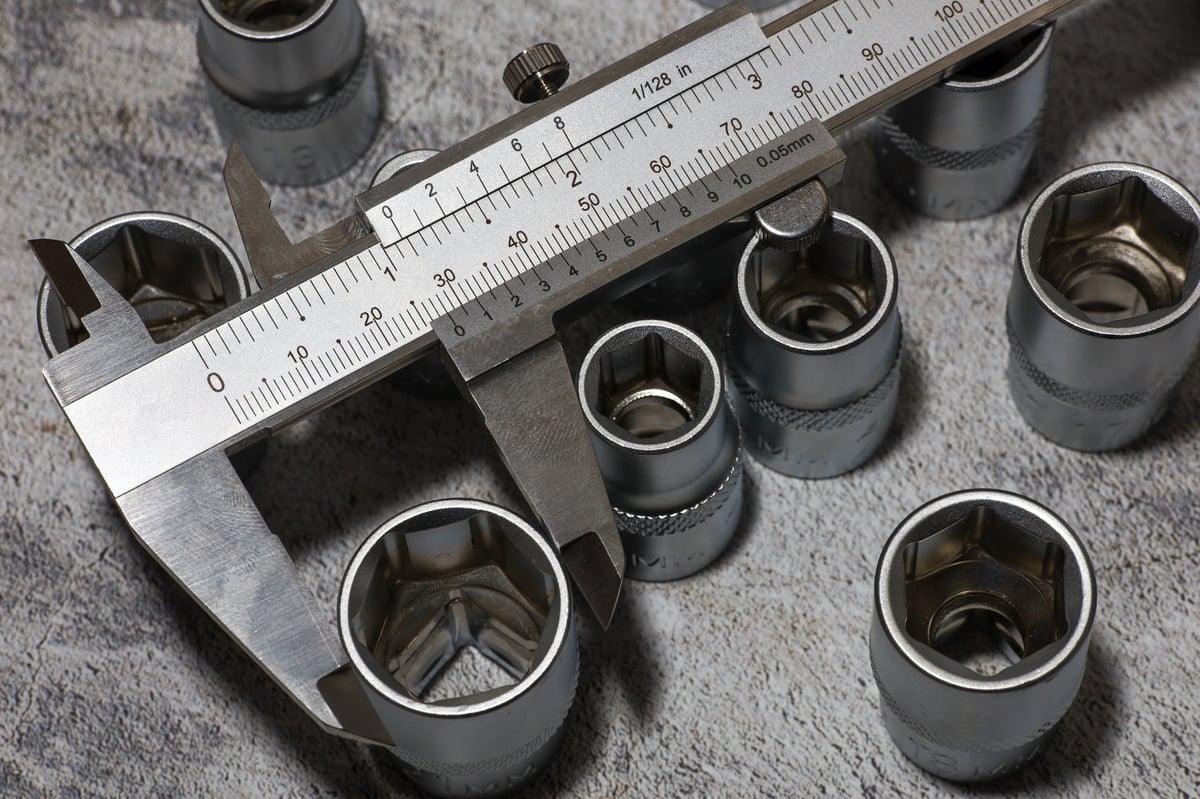
Illustration: Show why thickness must be checked independently.
Original illustration produced for this page; not a Noor Deira facility, customer material or test result.
From reference to enquiry
The reference identifies a section. Which order it belongs in depends on whether both legs and thickness resolved cleanly, whether the connection orientation is settled, and whether a change is being proposed for capacity.
| Decision | Why it matters here | Before you enquire |
|---|---|---|
| Use the entry | Both legs and thickness match the listed producer reference. | Verify the actual offered profile and tolerances. |
| Verify orientation | The member is unequal-leg or connects through one leg. | State the connected leg, holes and member orientation. |
| Engineering review | A size or thickness change is proposed for capacity. | Obtain the designer's approval for the actual member and connection. |
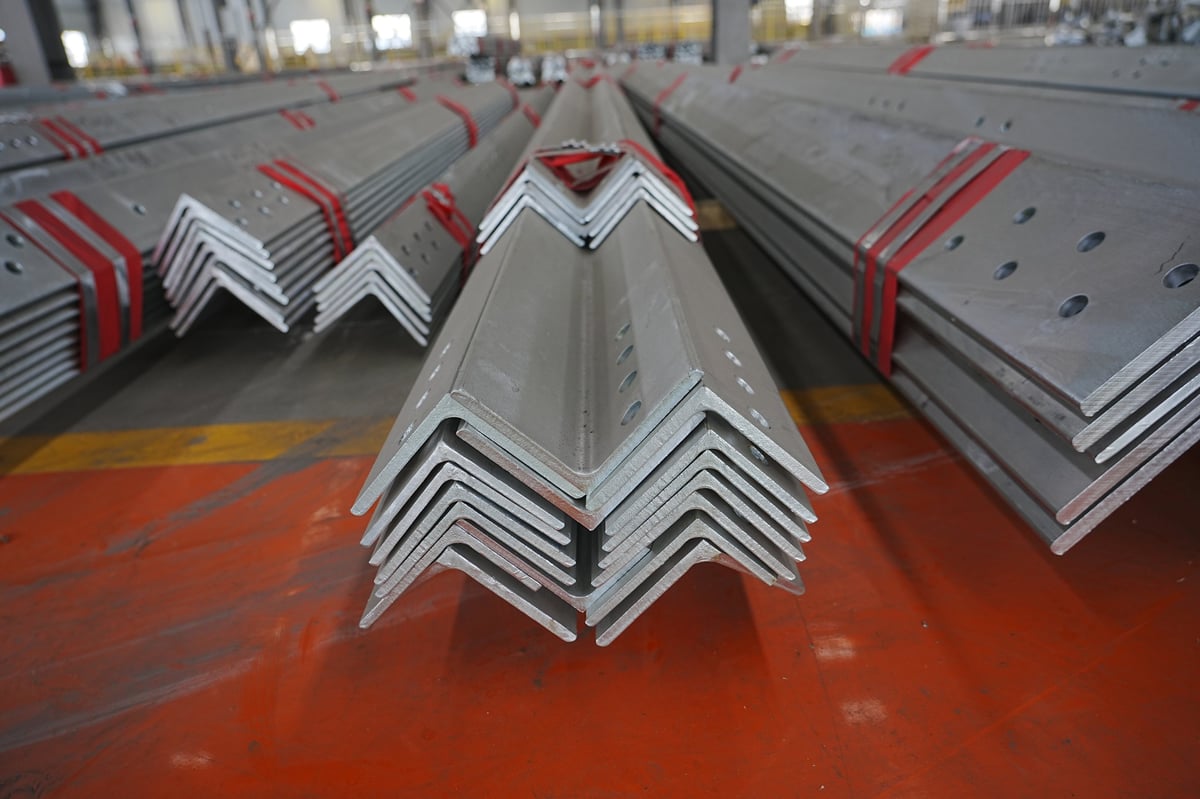
Illustration: Make both leg dimensions part of identification.
Original illustration produced for this page; not a Noor Deira facility, customer material or test result.
Where the angle is used
The chart identifies geometry; the application determines the governing design, connection and acceptance requirements. None of the links below approves a substitution.
Keep member marks, hole patterns and connected-leg orientation in the tower kit schedule.
transmission tower steel supplierConfirm the member arrangement and connection details before changing angle size or thickness.
structural steel for industrial buildingsLink the angle requirement to the controlled drawing revision and material schedule.
structural steel for construction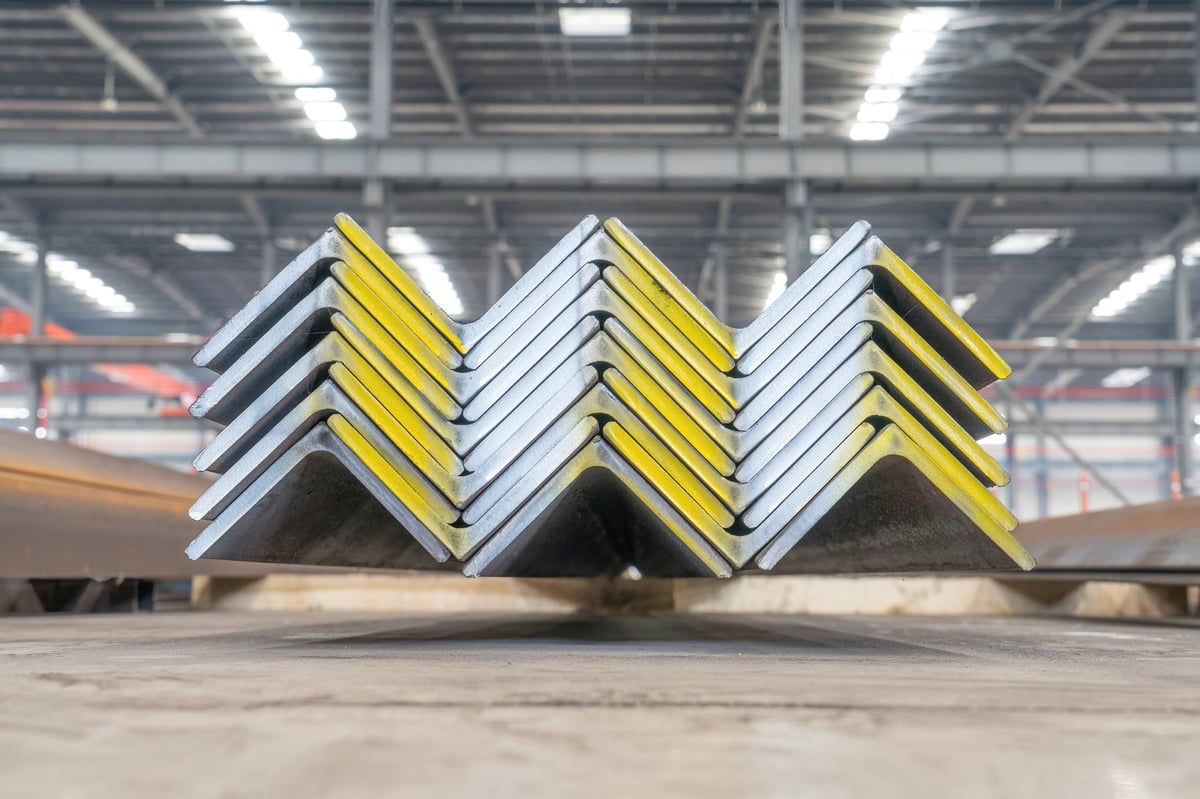
Illustration: Relate the lookup to connected-leg and hole-pattern requirements.
Original illustration produced for this page; not a Noor Deira facility, customer material or test result.
Related size resources
Use the appropriate form-specific resource and retain the central size-chart route for further profile discovery.
Reconcile estimated raw-section mass with the agreed commercial quantity basis.
structural steel weight chartUse channel-specific geometry for channel items rather than applying an angle rule.
steel channel sizesReconnect angle lookup with the wider size-chart system and the correct form-specific reference.
steel size chartsGCC destinations
Identify the receiving fabricator or site and whether raw or processed members are required. Country flags identify the destination; quotation must confirm the supply route, origin and availability for this order.

Carry full angle designations, orientation and piece counts into destination records. Identify the emirate, fabricator or site address and unloading restrictions; distinguish a domestic handover from an import leg.
structural steel supplier
Carry full angle designations, orientation and piece counts into destination records. Name the consignee, importer and final site; ask who confirms product classification and border documentation before dispatch.
structural steel supplier
Carry full angle designations, orientation and piece counts into destination records. State the nominated receiving point and project document approver; align certificate review with the required arrival window.
structural steel supplier
Carry full angle designations, orientation and piece counts into destination records. Specify the actual port, border point or inland site requested; separate the entry leg from onward transport and unloading.
structural steel supplier
Carry full angle designations, orientation and piece counts into destination records. Identify the contractor or fabrication yard receiving the sections; agree import-document responsibility and the named delivery place.
structural steel supplier
Carry full angle designations, orientation and piece counts into destination records. Confirm whether the order is for local consumption or onward shipment; name the consignee and agree who handles each transport leg.
structural steel supplierQuantity and commercial basis
State whether quantities and price use pieces, theoretical mass or measured mass. List drilling, cutting, marking, protection and packing separately, particularly where paired or kit-based members are requested.
None of these is established by a size chart, and none is confirmed by an automated estimate.
Coordinate an export enquiryAgree bundle grouping and member identification so equal, unequal and different-thickness angles remain distinguishable at receipt.
Expert insight
The producer's equal-angle table lists different thicknesses and nominal masses within the same leg size. That makes thickness an essential ordering field rather than an optional detail.
L 100x100x8
L 100x100x10
Buyer implication: Keep both legs and thickness in every item description, then review connection orientation and design approval separately.
Compare the 100 × 100 mm entries at different thicknesses without extending the table into a capacity claim.
Identification of the cited single equal-angle producer entries.
No pair resistance, load capacity, grade availability or cross-mill interchangeability is established.
ArcelorMittal equal-angle dimensions and mass table · Information reviewed .
Evidence
Each of these makes competing offers easier to compare against the same acceptance requirement — and each one is a question the size chart alone cannot answer.
Evidence to request
Exact producer table and approved detail drawing.
RFQ action
State both legs, thickness and equal/unequal form.
This makes competing offers easier to compare against the same acceptance requirement.
Evidence to request
Connection drawing, holes and member arrangement.
RFQ action
State connected leg, orientation and pair details if applicable.
This makes competing offers easier to compare against the same acceptance requirement.
Evidence to request
Material certificate, tolerance basis and agreed measurement method.
RFQ action
Add full grade, condition, lengths and commercial quantity basis.
This makes competing offers easier to compare against the same acceptance requirement.
Responsibility
Four stages stand between a dimensional lookup and accepted material. Each one has an owner, a required input and a failure mode — none of them is resolved by the chart.
| Stage and owner | Required input | Evidence or output | Risk and next action |
|---|---|---|---|
| Engineering release — Buyer's design authority | Confirm both legs, thickness, member form and connected-leg orientation. | Approved specification and drawing revision | Unapproved substitution can change the design basis. Close the item before proceeding. |
| Offer review — Buyer and quotation team | Compare the producer profile, grade, processing scope and quantity basis. | Written technical exceptions and commercial scope | An unlisted exception can survive into the purchase order. Close the item before proceeding. |
| Material release — Mill, inspector and buyer as agreed | Check material identity and agreed dimensional/hole evidence. | Accepted documents linked to the order items | Missing heat identity can make an otherwise correct section unacceptable. Close the item before proceeding. |
| Receipt and reconciliation — Receiving team | Reconcile full designations, item marks, lengths and piece counts. | Delivery record, item count and discrepancy record | Record any mismatch before the material is incorporated into work. Close the item before proceeding. |
Buyer questions
The answers below restate what the reference entries on this page actually support — and where the limit of a dimensional table begins.
No. Give both legs and thickness, plus grade, length and any processed-member detail. The cited 100 × 100 mm equal-angle entries carry different nominal masses at different thicknesses, so the leg size alone does not identify which one is on the schedule.
Only after the responsible designer checks the member and connection implications. Equal and unequal angles differ in how the section behaves about each axis and in how it fits an existing connection, so a swap that looks reasonable on the larger leg can still change the design basis.
No. Capacity requires the full design, grade, member length, restraint, orientation and connection conditions. A nominal mass per metre is an arithmetic property of the section, not a statement about how it performs in a structure.
Do not infer built-up-member performance from single-angle data. Use the actual arrangement and appropriate design basis. A back-to-back pair is a different member from a single angle, and its resistance is established by the designer rather than by a dimensional table.
It is a reference for theoretical estimates. Confirm the commercial basis, tolerances, processing and measured delivery where applicable. The estimate allows nothing for permissible rolling deviations, coating, holes, cutting waste or packing.
Request its verified producer entry and drawing. Do not interpolate an unlisted size or thickness. The reference set on this page is a compact selection rather than a full rolling catalogue.
Enquiry handoff
Copy the lookup with the completed grade, orientation and processing requirements. Keep any size or thickness substitution separate for design approval.
Prepare and copy the summary above, then open the structural-steel RFQ and paste it into the message field. Add your name, company and reply email on that form. Supporting drawings can be shared through the destination's verified contact process.
This page prepares your enquiry locally. Opening the RFQ does not submit it. A submission is complete only when the receiving form returns a genuine acknowledgement.
Office 3303, Churchill Executive Tower, Business Bay, Dubai, United Arab Emirates
Monday – Saturday: 8.00 AM – 6.00 PM · Sunday: Closed
Price on request. Quotation and engineering approval remain pending until confirmed in writing.