
Line pipe integrity · API 5L X70

API 5L X70 Steel Pipe

On a high-strength line, the question is rarely whether the pipe is strong enough. It is whether everything around it has kept pace — the wall your design permits at this level, the welding procedure your contractor can actually run, the fracture demand your service imposes, and the traceability that proves the pipe you received is the pipe that was tested. This page maps those risks to the evidence that retires them.

Price on request. A higher level is not a cost guarantee and not an interchange — both are project outcomes and are confirmed, never assumed.

Risk-to-evidence map

Five integrity risks, and the evidence that retires each one

Higher strength raises the consequence of anything left unproven. Work down the map and mark each risk once its evidence is in place. Some depend on others — the map tracks that chain rather than treating the list as flat.

Design service

BlockedDesign authority

The line is designed to a service envelope the pipe was never qualified for.

Why this grows with the strength level

As strength rises, the consequences of an unstated service condition grow — the supplement your line needs is a design input, not something the grade implies.

Evidence that retires it

The service conditions and any supplementary requirement, stated on the enquiry and confirmed against the governing edition.

Wall and diameter

UncoveredDesign authority

The reduced wall the higher level permits is unachievable at the diameter or tolerance required.

Why this grows with the strength level

Stepping up is usually justified by a thinner wall. If that wall is not a practical product at your diameter, the case for the higher level disappears.

Evidence that retires it

A wall re-derived from the design calculation at this level, and confirmation it is an available product at the ordered diameter.

Field welding qualification

UncoveredFabrication and field welding

The welding procedure the contractor intends to run is not qualified for this level, wall and route.

Why this grows with the strength level

The acceptable welding window narrows as strength rises. The heat-affected zone is where the margin is most easily lost, so the qualification gate tightens.

Evidence that retires it

A qualified welding procedure specification covering the level, wall, diameter, positions and consumables actually in use.

Impact and fracture

UncoveredDesign authority

Fracture-arrest and impact requirements are assumed from the grade rather than derived from the service.

Why this grows with the strength level

Cold service, unstable ground, cyclic loading and offshore routing each raise the fracture demand. On a high-strength line the consequences of getting it wrong are larger.

Evidence that retires it

The impact and fracture requirements your design code and service invoke, agreed with the test scope before the order.

Traceability

UncoveredProcurement

Test records cannot be connected to the heat and bundle actually delivered.

Why this grows with the strength level

Higher-strength pipe carries more test and inspection evidence. The more of it there is, the more it matters that each record traces back to the consignment it claims to describe.

Evidence that retires it

A certificate set, marking regime and heat reference agreed on the order and verified on receipt.

Map

Five integrity risks rise with the strength level

Mark each one once the evidence that retires it is in place. The map shows which risks are still uncovered and which are blocked by an earlier gap — a risk is not covered just because its own box is ticked.

  • Design service: blocked
  • Wall and diameter: uncovered
  • Field welding qualification: uncovered
  • Impact and fracture: uncovered
  • Traceability: uncovered

Integrity record

API 5L X70 line pipe — integrity risk and evidence record

Design service (Design authority): partly evidenced — blocked upsteam
Wall and diameter (Design authority): [UNCOVERED]
Field welding qualification (Fabrication and field welding): [UNCOVERED]
Impact and fracture (Design authority): [UNCOVERED]
Traceability (Procurement): [UNCOVERED]

Supplier: Noor Deira Steel Trading L.L.C. — sales@noordeirasteel.ae — office +971 56 398 0860
Governing edition, declared level and project specification to be confirmed at quotation.

The map tracks whether evidence exists — it does not judge whether the evidence is adequate for your line. That assessment belongs to the governing edition of the specification, the declared level and your project's design basis. Use it to see what is still unproven, not to sign anything off.

What strength changes

What rises with the level, and what stays with the code

The common failure on a high-strength order is assuming everything moves together. Some things do scale with the grade. Others are fixed by the standard, the declared level or your own design basis no matter which level you pick.

What measurably rises with the level

  • The welding qualification burdenThe acceptable procedure window narrows, so the range of qualified procedures and consumables that will pass shrinks in step.
  • The consequence of an unproven riskThe same gap — an unstated service condition, an unqualified procedure — costs more at a higher level because there is less margin to absorb it.
  • The volume of evidence the order carriesMore testing and inspection attaches to a high-strength line, which raises the importance of traceability rather than lowering it.
  • Your sensitivity to the wall being wrongIf the thinner wall the level permits is not achievable, the entire reason for choosing the higher level falls away.

What stays code- or PSL-specific

  • The inspection regimeStill set by the purchase specification level you declare — the grade does not choose it for you, at any strength.
  • Dimensional toleranceStill governed by the standard's tolerance provisions and by what you order, not by how strong the steel is.
  • Pressure designStill a design-code calculation using the level, the wall and the diameter together. A stronger grade is one input to it, never the answer.
  • The documentation requirementStill whatever your project and the standard demand — the level changes what is tested, not whether you have to agree the set in advance.

The cost question, answered honestly

A higher level is frequently chosen because it permits less wall, and less wall means less steel per kilometre. That is a real and often significant saving — but it is not automatic, and it is not the whole sum. Weigh it against the welding control the level demands, the consumable and heat-input limits your procedures have to respect, the extra inspection the consequence attracts, and whether the reduced wall is genuinely available at your diameter.

Cost per tonne is the wrong measure. Cost per installed kilometre of line is the one that decides whether stepping up was worth it — and that figure depends on your design basis, not on the grade in isolation.

Pressure is a combined calculation

Pressure capability comes from the level, the wall and the diameter resolved together under your design code. Reading it off the grade alone — at any strength — is the error this whole page exists to prevent.

How pressure capability is derived

The field welding gate

On a high-strength line, qualification is the gate — not the paperwork

Everything else on an X70 order can be corrected on paper. The welding procedure is the one item that has to be right before the pipe is made, because the heat-affected zone is where a high-strength line loses its margin.

Before the design is frozen

Establish which welding procedure your contractors actually intend to run, and confirm the qualification range covers the level, wall, diameter and joint configuration you are ordering. Doing this early is what keeps it cheap.

  • Check the qualified range, not just the fact of a qualification.
  • Confirm positions, consumables and heat-input limits are covered.
  • Flag any gap while the design basis can still absorb it.

When the order is placed

The wall and diameter on the order are the ones the procedure has to match. If the design re-derives the wall after the welding position was confirmed, the qualification check has to be repeated against the new figures.

  • Re-confirm after any change to wall or diameter.
  • Keep the procedure reference with the order documents.
  • Do not assume a qualification transfers across a wall change.

On receipt and in the field

Traceability is what connects the qualification to the pipe actually installed. The markings on the bundle, the heat reference and the test records have to line up with the procedure and the line they are going into.

  • Verify bundle markings against the records on receipt.
  • Keep the heat reference attached to the field weld records.
  • Treat a broken trace as a finding, not a formality.
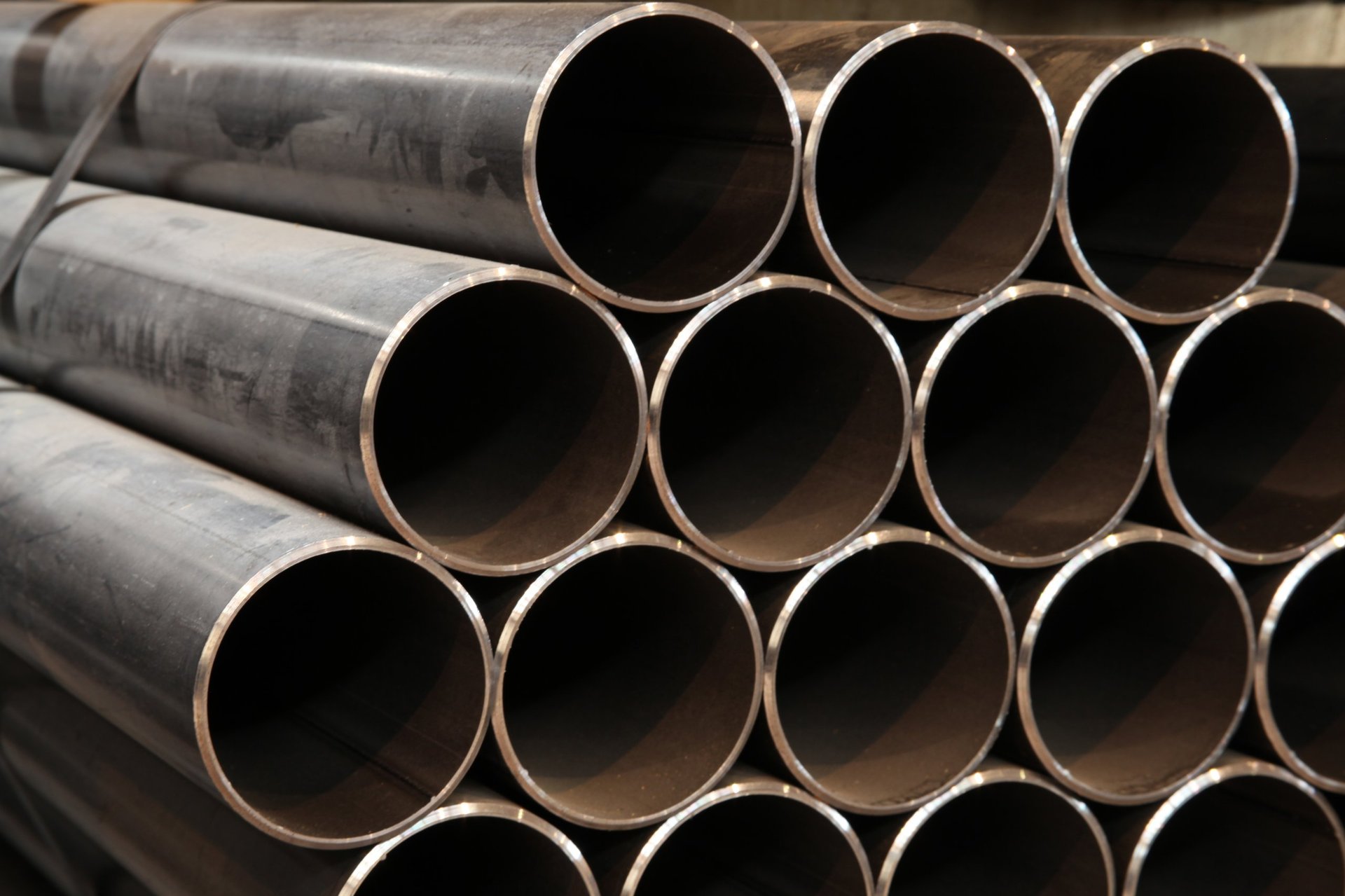
Line pipe ends prepared for girth welding and dimensional verification
The wall and diameter on the order are the ones the field welding procedure has to be qualified against. If either moves, the qualification check moves with it.

Where X70 genuinely applies

X70 is a line-pipe designation. These are the applications where it is a real fit — not a claim that it belongs in every pressure-carrying service.

  • Large-diameter transmissionWhere the design genuinely benefits from the level — typically larger-diameter, higher-pressure gas or oil transmission with the welding qualification to support it.
  • Offshore and marine routingSubject to the supplementary requirements the location invokes. Offshore service usually adds to the fracture and inspection position rather than sitting at the base specification.
  • Replacement spools and tie-insFabricated to the original line specification so the replacement matches the installed level, wall and qualified procedure — no unapproved substitution.

GCC markets

Where an X70 requirement is coordinated

Destination changes the commercial and documentary side of the order, not the integrity position. Choose the market to see what each destination expects before the consignment is released.

These market pages are procurement destinations, not a claim of premises in each country. Supply is coordinated from Dubai and delivered against the destination and delivery date you state.

Compare and verify

The references that answer what this page deliberately leaves open

The map tells you which risk is uncovered. These are the resources that help you work out what the answer should be — and one adjacent level to compare against.

Comparing against a lower level

A lower level in the same series is not an interchangeable part, and it is not automatically the safer choice either — it usually means a heavier wall for the same design pressure. Where the level you are weighing sits below this one, the X52 grade page covers the same ordering discipline at a lower strength.

Whichever direction a substitution goes, it changes the wall the design permits, the fracture position and the welding procedure. Each of those has to be re-confirmed against your design basis with the design authority's approval — never carried across from the grade name.

Read the governing standard

The levels, the inspection regimes and the permitted manufacturing routes all sit inside the standard. Read it alongside your project specification rather than relying on the grade reference alone.

From risks to offer

How a covered integrity map becomes a firm quotation

The map retires the technical risk. This is the sequence that turns it into a comparable offer, and the point in it where each piece of evidence is actually tested.

  1. Evidence agreed

    Design, fabrication and procurement

    Each risk on the map has an owner and a piece of evidence against it.

    Unowned risks are the ones that surface as field findings.

  2. Requirement handed over

    Buyer to commercial desk

    One enquiry carrying the level, wall, service, welding position and traceability ask.

    A grade-only enquiry invites offers that cannot be compared.

  3. Welding position verified

    Buyer and contractor

    The qualified procedure is checked against the level, wall, diameter and route ordered.

    Discovering the qualification gap after the order is the expensive version.

  4. Test and inspection scope fixed

    Commercial desk

    The scope priced is the one the declared level and service generate.

    A scope left undefined is priced off somebody's default.

  5. Offer with commercial terms

    Commercial desk

    Availability, price, quantity and delivery confirmed on request.

    Commercial variables stay open until you supply them.

  6. Traceability verified on receipt

    Buyer and supplier

    Bundle markings, heat references and records line up with the consignment.

    A record that cannot be tied to pipe verifies nothing.

Send the requirement and the desk comes back against your basis rather than a standard package. Reachable Monday to Saturday, 8.00 AM to 6.00 PM Gulf time.

Request a Quote

Straight answers

Integrity questions that come up on an X70 enquiry

These are the ones the desk fields most often from engineering teams evaluating a high-strength level, answered the way they are answered there.

01"Does the higher grade pay for itself?"

Only if the wall it permits is genuinely achievable and the extra control it demands is something your project can absorb. The saving is real where the calculation gives you a thinner wall at your diameter. The cost is real too — tighter welding control, narrower consumable and heat-input windows, and more inspection because the consequence is higher. Run both sides against your design basis rather than against a price per tonne, and let the installed cost per kilometre decide.

02"If the mill certifies it as X70, aren't we covered?"

A certificate tells you the pipe was made and tested to what was ordered. It does not tell you that what was ordered matches what your line needs. If the service condition, the fracture requirement or the welding position was never written into the order, the certificate has nothing to verify on those points — it will faithfully describe a pipe that may still leave a gap in your integrity case. The certificate is the end of the supply chain's responsibility, not the end of yours.

03"Our welders are experienced. Is a procedure check really necessary?"

Experience and qualification are different things, and on a high-strength line the difference is where problems live. A qualified procedure defines a window — heat input, consumables, positions, preheat — and a crew working by habit can drift outside it without noticing, especially on a level with less margin to absorb the drift. The check is not a comment on your welders. It is the mechanism that proves the window you are relying on covers what you are actually doing.

04"We've used X70 before on a similar line. Can't we reuse that specification?"

Reuse it as a starting point, not as the answer. The governing edition, the declared level, the service conditions and the design basis all have to match before a previous specification carries across, and a 'similar' line is rarely identical on all four. The wall may need re-deriving, the fracture position may sit differently, and the welding qualification may or may not extend. Send the previous specification and the desk will tell you where it still applies and where it does not.

05"How much traceability is reasonable to ask for?"

Ask for as much as your project can use, and agree it before the order rather than after. At minimum you want each test record tied to the heat and the bundle marking, so the pipe in the ground can be connected to the results that qualified it. That connection is a requirement you place on the order — it does not happen by default, and it cannot be reconstructed once the consignment has been dispersed along the spread.

06"Do you have X70 available now?"

We do not publish stock positions on this page, because a figure written here would be stale by the time it mattered, and availability at this level varies with diameter, wall and route. It is confirmed against your requirement, quantity and required date when the enquiry reaches the desk. That is the honest sequence: the answer you plan around is the one given for your order.

Frequently asked questions

API 5L X70 — the integrity questions that shape the order

Five questions engineering teams raise when evaluating this level, answered without deferring the technical position to the quotation stage.

Does a higher strength level automatically cut our steel cost?

No, and treating it that way is how projects end up with a worse commercial outcome than they expected. A higher level generally permits less wall for the same design pressure, which is the real saving — less steel per kilometre. But that only materialises if the reduced wall is achievable and available at your diameter, and it is offset by anything the higher level costs you elsewhere: a wider qualification burden, tighter welding control, more demanding consumable and heat-input limits, and inspection that rises with consequence. Whether the net is positive is a project calculation, not a rule.

We run high-strength line pipe already. Is X70 just another one of those?

X70 is a specific strength level inside the API 5L series, and treating it as a generic member of a high-strength family is where the errors start. What matters for your project is the governing edition, the purchase specification level, the manufacturing route, the wall derived from your own design calculation, and the service your line will see. Two pipes both called X70 — made to the same standard but with different declared levels, routes or service supplements — are not interchangeable for your line, and a supplier cannot tell you which one you need from the grade name alone.

What has to be proven before X70 can go into the field?

The welding. On a high-strength line the field welding plan is the qualification gate, not an afterthought. The welding procedure specification your contractors intend to run has to be qualified for the level, the wall, the diameter and the joint configuration you are ordering, and that qualification has to cover the positions and consumables actually used on site. The heat-affected zone is where the margin on a high-strength line is most easily lost, so the procedure window narrows as the strength rises. Confirm the qualification holds before the design basis is frozen.

Which fracture and impact requirements sit on top of the grade?

Those come from your service condition and your design code, not from the strength level. Where a line operates cold, runs across unstable ground, sees cyclic loading or sits offshore, the fracture-arrest and impact-toughness requirements that govern it are set by the design basis and by any supplementary requirement your project invokes. The grade tells you what the pipe is made of; it does not tell you what your line has to resist. State the service in plain terms and the governing requirements can be confirmed against the edition, the declared level and your project documents.

How much traceability can we actually require on the order?

As much as you write into it — and on a high-strength line it is worth writing more rather than less. Traceability is what ties each test record back to the heat, the bundle marking and the pipe you actually received. That connection is not automatic: it is a requirement you place on the order. Confirm the certificate set, the marking regime and what has to reference back to the heat before the order is placed, because a record that cannot be connected to a physical consignment verifies very little.

Still carrying an open risk?

Send the enquiry with the evidence you have and flag what is still open. The desk will tell you what it needs before it can price, rather than returning a number built on assumptions.

Noor Deira Steel Trading L.L.C.

Office 3303, Churchill Executive Tower, Business Bay, Dubai, United Arab Emirates · Monday to Saturday, 8.00 AM to 6.00 PM, Sunday closed.

+971 56 398 0860sales@noordeirasteel.ae

Request a quote

Send the integrity picture, not the grade alone

Send the level you are working to alongside the wall, service and welding position you have settled. The commercial desk confirms availability, price and documentation scope from what you send — price on request, and nothing is treated as interchangeable.

What makes an X70 enquiry reviewable

The strength level and the declared purchase specification level

Wall thickness re-derived at this level, and the diameter

Service conditions and any supplementary requirement invoked

The welding procedure qualification position

Impact and fracture requirements from your design basis

The certificate set and heat traceability required

Quantity, delivery point and required date

Rather talk it through?




