Seamless pressure tube · Multipart EN series

EN 10216 Steel Pipe

EN 10216 is not one requirement — it is a multipart series, and which part applies is the first decision on any European-spec pressure tube. The parts are divided by material family and by the temperature band the tube is written for, and they are not interchangeable. Set the two inputs your design already holds and see which part's published scope matches them.

Price on request. EN 10216 covers seamless tubes — the welded counterpart is EN 10217, a separate standard. No pressure rating or wall thickness follows from the part number; those come from your design calculation.

Temperature band

The part is written for a service band — match it to your design.

Material family

Non-alloy, alloy, fine-grain alloy or stainless — each is separate.

Seamless route

EN 10216 is seamless; EN 10217 is the welded standard.

Order fields

Grade, dimensions, test category and documents — stated, not assumed.

What the series governs

EN 10216 fixes the delivery condition for a seamless pressure tube — nothing more

The series is a set of technical delivery conditions. It says what the tube is made of within a given part, how it is delivered and how it is tested — and it does that separately for each material family and service band. Read it as one standard and the parts collapse into an assumption.

Inside the series

  • The seamless manufacturing routeEN 10216 covers seamless tube. The welded equivalent is a separate standard, not another part of this one.
  • The material family per partEach part addresses its own family — non-alloy, alloy, fine-grain alloy or stainless — not the whole range.
  • The service band per partThe parts divide by temperature service, so the band your design sits in decides which part applies.
  • The delivery condition and inspectionThe grade, delivery condition and inspection the order must state are set within the applicable part.

Outside it — and often assumed

  • It is not a pressure ratingAllowable pressure comes from a design calculation using the dimensions and design temperature.
  • It does not approve the designPressure design and the design code are separate documents from the delivery condition.
  • It does not pick your wall thicknessThe wall for the duty is a design output, not a figure the standard supplies.
  • The parts are not interchangeableA tube to one part does not satisfy another part's delivery condition, even when the grade name looks familiar.

Why a multipart series trips up a purchase order

A standard that arrives as a single document invites a single line on the order. A multipart series does the opposite: naming "EN 10216" points at the family of parts and leaves the part itself unnamed, and the part is where the material family, the service band and the inspection are actually set. Two suppliers can both quote "EN 10216 tube" and be describing different parts with different delivery conditions — which is how a comparison sheet ends up comparing things that were never the same.

The fix is procedural rather than technical, and it belongs early: fix the part on the requisition before the enquiry goes out. Then the grade, dimensions, test category and documentation sit inside a part that everyone has agreed on. A tube requirement that names its part is comparable; one that names only the series is an invitation for each supplier to assume.

Part scopes on this page are stated by material family and service band only. We publish no grade lists, temperature figures or test-clause numbers — those follow the governing edition of the applicable part and are confirmed against the requirement you state.

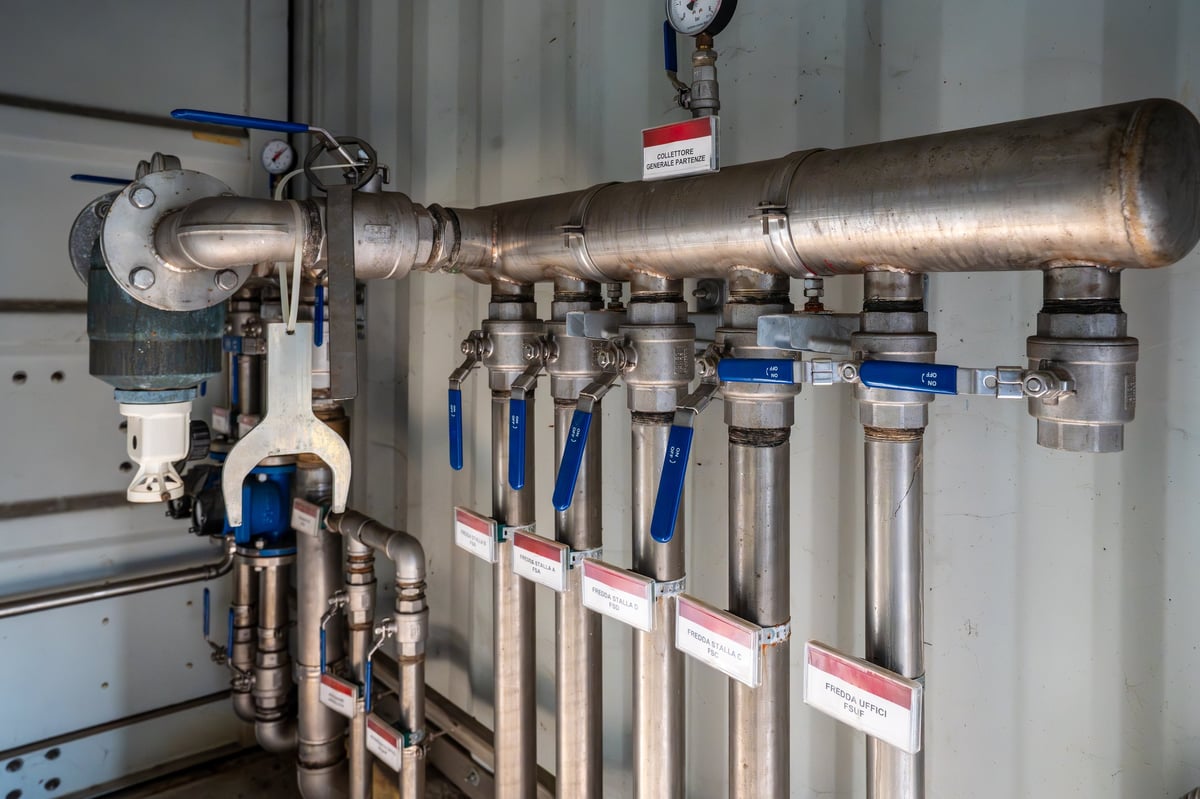
Pressure tubing with gauges and valves on a process manifold
The delivery condition the series sets and the design calculation your line needs are two different documents — the part governs the tube, not the system.

Where EN 10216 stops

Seamless and welded are two standards — not two options within one

The most consequential confusion on a European-spec tube order is not between parts, it is between standards: EN 10216 for seamless and EN 10217 for welded. They are separate documents for separate manufacturing routes, and one cannot discharge the other.

EN 10216 — this page

The seamless series for pressure purposes. The tube is formed without a longitudinal weld, and the parts divide by material family and temperature service. If your design basis specifies a seamless tube, this is the series the applicable part is drawn from.

  • Seamless manufacturing route — no longitudinal weld.
  • Multipart, divided by material family and service band.
  • Parts are separate delivery conditions, not editions.

EN 10217 — a separate standard

The welded counterpart for pressure purposes. It is a different standard, for a different manufacturing route, and it is not a part of EN 10216. A seamless requirement cannot be met by a welded tube or the reverse — the route is part of the specification. If your design basis names the welded standard, that is what has to be ordered, against EN 10217's own parts.

  • Welded manufacturing route — a different product form.
  • Its own standard and its own parts, not a variant of EN 10216.
  • The route is the specification, not a supply convenience.
EN 10217 welded pressure tube
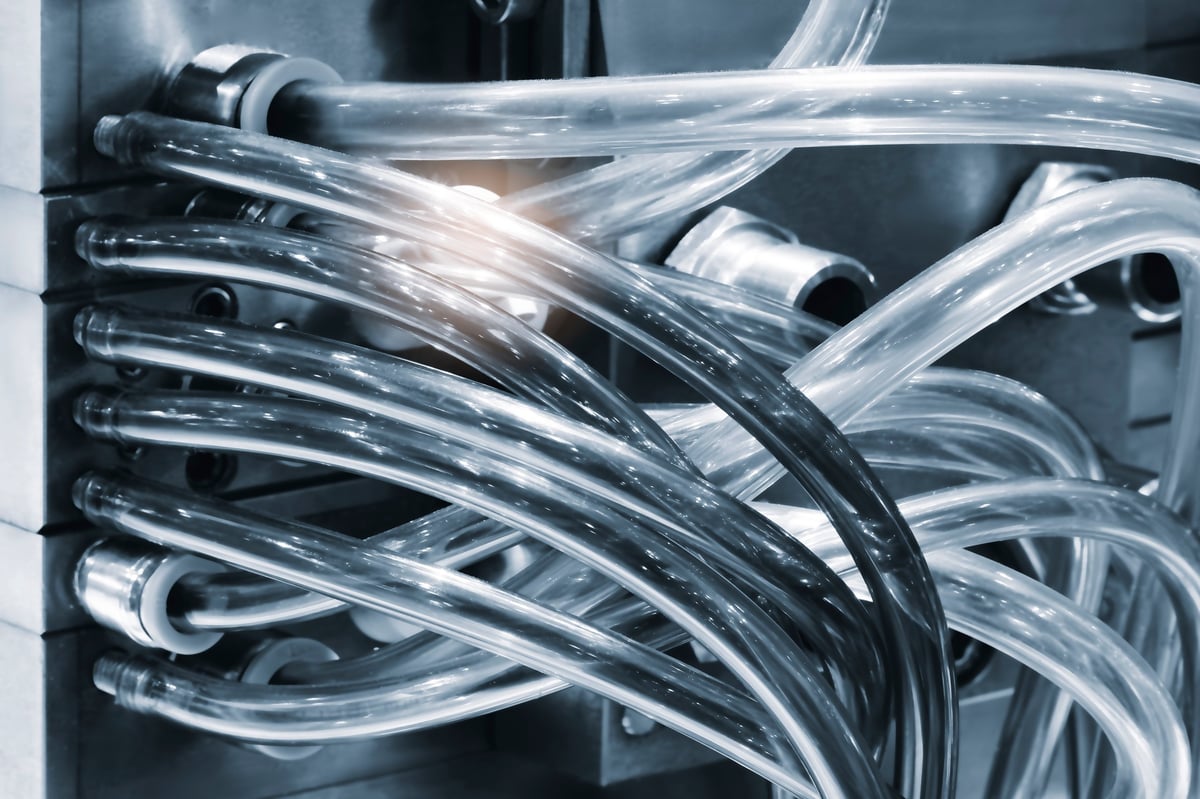
Close-up of pressure tubing and valves on industrial process equipment
A seamless tube and a welded tube can look alike on a rack. The manufacturing route is written into the standard — and it is not a detail you can swap after the order.

Why the route cannot be a substitution

Offering a welded tube against a seamless specification reads, on an order sheet, like a supply decision — the tube is still steel, still pressure-rated by the same calculation. It is not. The manufacturing route changes the product form the delivery condition is written for, and the certificate that arrives describes that form. On a pressure line in a regulated service that is the kind of gap an inspector finds before anything else.

For a tube destined for oil and gas or another process application, the product form is often fixed by the project specification before procurement sees it — which is exactly why naming it plainly, and refusing the swap, keeps every quotation on the same basis.

No equivalence between EN 10216 and EN 10217 is implied anywhere on this page, and none should be read into a quotation. Confirm the manufacturing route with your design authority before the tube is ordered.

Order-specific fields

What an EN 10216 purchase order has to state beyond the standard's number

The series provides the framework; the order-specific fields are what turn a generic request into a deliverable. These are the inputs worth fixing before the enquiry goes out, because each one is a field the certificate has to reflect and the standard alone does not supply.

Order input

The applicable part

Fixed by material family and service band. Named on the order so every quotation describes the same delivery condition.

Order input

The material grade and delivery condition

The grade within the applicable part, and the delivery condition the order states. The part sets the framework; the grade is yours to name.

Order input

Dimensions and wall convention

Outside diameter, wall thickness and length, with the convention understood — these feed the design calculation, they do not replace it.

Order input

Test category and inspection

The inspection and test category the order requires, stated rather than assumed. The framework offers the options; your project picks one.

Confirmed at quotation

Documentation the order must carry

The records your project expects to receive — agreed at order placement, because an assumed set cannot be added after delivery.

Project-side

The design code on the project side

The pressure-design and construction code your project follows, which is a separate document from the delivery condition and stays with your engineering team.

A reasonable fit when

  • The design basis names a seamless pressure tube to the EN series.
  • The applicable part is fixed from the material family and the service band.
  • The grade, dimensions, test category and documentation are stated on the order.
  • The pressure-design code and the construction checks are held on the project side.

Revisit the basis when

  • The order names 'EN 10216' without naming a part.
  • A welded tube is being offered against a seamless requirement, or the reverse.
  • A pressure rating or wall thickness is being inferred from the part number.
  • The test category or the documentation was assumed rather than stated.

The material family behind the part

The parts sit within the wider steel pipe supply range, and most of the non-alloy parts in this series describe a carbon steel pipe material. The wider designations the grades sit within are gathered in the EN steel grades reference — useful when the grade itself is still being settled, before the part is fixed.

Where this series is often specified

Seamless pressure tube to this series is frequently written into oil and gas and other process duties, where the product form and the delivery condition are fixed by the project specification early — which is why naming the part on the order matters more here than on a general-service line.

The application reference covers where the product is used; the standard reference covers what the tube must be.

GCC markets

Where an EN 10216 requirement is coordinated

An EN-spec requirement is often raised on a project inside the Gulf, where the design basis is European but the delivery is local. Destination changes the commercial and documentary side of the order, not the acceptance basis.

These market pages are procurement destinations, not a claim of premises in each country. Supply is coordinated from Dubai and delivered against the destination and delivery date you state.

Compare and verify

The references that help you settle an EN-spec tube requirement

A European-spec tube requirement is frequently raised where a US-spec or general-service one was meant, and the neighbouring references carry the decision either way. These are the pages worth checking before the part is fixed.

Comparing across parts and standards

A designation from one part is not an interchangeable part for a designation in another, and within the series the parts are not tiers of one product — they are separate delivery conditions reached for on separate grounds. Moving between them changes the material family or the service band, and with it the inspection and the certificate expectations, so it has to be re-confirmed against your design basis rather than carried across from a designation on an old requisition.

Where the requirement is a steel tube rather than a pipe, or the manufacturing route is still open, check the product form first — the standard and the delivery condition change with it, and so does what the certificate has to demonstrate.

Read the governing part

The grades a part covers, its delivery conditions and its inspection provisions all sit inside that part of the standard. Read the applicable part alongside your project specification and your design code rather than relying on the series name alone — the documents answer different questions, and the part only answers its own.

An EN-spec requirement is often raised on a project inside the Gulf, where the design basis is European but the delivery is local — the UAE market page sets out how project coordination and release documents are handled locally, worth reading before you fix the delivery basis.

From part to offer

How an EN-spec tube requirement becomes a firm quotation

The navigator settles which part describes your service; the order fields settle what the tube must be within it. This is the sequence that turns that into a comparable offer, and the point at which each input is actually used.

  1. Manufacturing route fixed

    Design authority

    The design basis names a seamless tube, so the EN 10216 series applies rather than the welded one.

    A welded requirement points to EN 10217 — a separate standard, not a part of this series.

  2. Service band established

    Design authority

    The operating temperature places the duty in a band the series organises its parts around.

    Without it, the applicable part cannot be identified — the parts divide by band.

  3. Material family and part named

    Specification author

    The family and the applicable part are named on the requisition, not left to a supplier.

    An unnamed part leaves the delivery condition to an assumption.

  4. Dimensions and grade stated

    Buyer and commercial desk

    The grade, dimensions and wall convention are written onto the order inside the chosen part.

    Dimensions feed the design calculation — they do not replace it.

  5. Test category and documents agreed

    Project team

    The inspection category and the record set are fixed before the order is placed.

    An assumed record set cannot be retrofitted into the certificate after delivery.

  6. Offer with commercial terms

    Commercial desk

    Availability, price, quantity and delivery confirmed on request.

    Commercial variables stay open until you supply them.

Send the part shortlist and the order fields and the desk comes back against your requirement rather than a standard package. Reachable Monday to Saturday, 8.00 AM to 6.00 PM Gulf time.

Request a Quote

Straight answers

The questions that come up when EN 10216 is being specified

These are the ones the desk fields most often from EU-spec pressure-tube buyers, answered the way they are answered there — including the parts that make the process slower.

01"The order says EN 10216 — isn't that enough?"

No, and on a multipart series this is the assumption that costs the most. EN 10216 names the family of parts; the part itself is what fixes the material family, the service band and the inspection. An order that stops at the series name leaves those three to whoever supplies the tube, and two suppliers can both quote 'EN 10216' while describing different parts. When you compare quotations, compare the full designation — series, part and grade. If an offer does not state the part, the part has not been fixed.

02"Can I use a welded tube if seamless isn't available?"

Not as a supply convenience. EN 10216 covers seamless tubes and EN 10217 covers the welded equivalent — they are two separate standards for two manufacturing routes, and one does not discharge the other. The route is part of the specification, written into the delivery condition and reflected on the certificate, so swapping it changes what your order is. If the welded route is acceptable to your design, that is a decision for whoever owns the design basis, and it should reach us as the standard you now want. Weld it into the requirement rather than into a substitution.

03"Which part is the strongest, so I can just order that one?"

The parts are not ranked against each other — they are separate delivery conditions reached for on separate grounds. Part 2 addresses an elevated-temperature service with a particular material family; Part 4 addresses a low-temperature service; Part 5 addresses stainless; and the room-temperature part is distinct again. There is no 'strongest' part, because the parts answer different questions rather than the same question at different levels. Pick the part whose scope matches your service band and material family, and the choice becomes straightforward rather than a judgement about quality.

04"Does the part tell me the wall thickness or pressure rating?"

It does not, and no table on a supply page can stand in for the calculation. The part governs the delivery condition — what the tube is made of, how it is delivered and how it is inspected. The wall thickness for your duty and the allowable pressure of your line come from a pressure-design calculation using the dimensions, the design temperature and the design code your project follows. Give us the dimensions your design requires and the part your specification names, and we supply the tube — the design stays with your engineer.

05"What test category should I specify?"

The test or inspection category is one of the order-specific fields, and it is yours to state rather than ours to choose — the framework offers the options and your project selects the one your service requires. That is why the order fields are listed explicitly on this page rather than read off a table. Tell us the category and the documentation your project expects to receive, and the desk confirms the offer against them rather than assuming a default.

06"Do you hold EN 10216 tube in stock now?"

We do not publish stock positions on this page, because a figure written here would be stale by the time it mattered, and availability varies with part, grade, dimensions and inspection category. It is confirmed against your stated basis, quantity and required date when the enquiry reaches the desk. That is the honest sequence — the answer you plan around is the one given for your order.

Frequently asked questions

EN 10216 — the questions that shape the order

Five questions EU-spec pressure-tube buyers raise most often, answered without deferring the technical position to the quotation stage.

Is EN 10216 one standard or several?

It is a multipart series, and that is the single most important thing to understand before ordering. EN 10216 is the umbrella for seamless steel tubes for pressure purposes, and it is divided into parts that each address a different material family and a different temperature service. The parts share a general structure but they are separate technical delivery conditions — not editions of one another and not interchangeable. A purchase order that says only 'EN 10216' has named the series and left the actual requirement open, and it is the part that fixes what the tube must be.

How do I know which EN 10216 part applies to my line?

The part follows from two inputs your design basis already holds: the operating temperature and the material family. The series is organised so that each part covers a distinct combination — the non-alloy grades at room temperature sit apart from the elevated-temperature parts, the low-temperature part sits apart from both, and the stainless part is separate again. So the question is not which part is 'best' but which part describes your service. Settle the temperature band and the material family first, and the applicable part follows from them rather than from a supplier's preference.

What is the difference between EN 10216 and EN 10217?

They are two separate standards distinguished by the manufacturing route: EN 10216 covers seamless tubes for pressure purposes, and EN 10217 covers the welded equivalent. They are not interchangeable, and an EN 10216 seamless requirement cannot be satisfied by an EN 10217 welded tube or the reverse — the manufacturing route is part of the specification, not a supply detail. If your design basis names one and an offer presents the other, that is not a substitution to accept quietly. We quote the standard and route your specification names.

What has to appear on an EN 10216 purchase order?

More than the standard's number, because the series is multipart. The order has to identify the part, the material grade and the technical delivery condition within it, the dimensions and the wall convention, the test category or inspection the order requires, and the documentation it must carry. The specification provides the framework; the order-specific fields are what make your order a distinct deliverable rather than a generic request. Naming those fields is how the offer you accept and the certificate that arrives describe the same tube.

Does EN 10216 tell me the tube's pressure rating or wall thickness?

No, and no table on a supplier's page can substitute for it. The standard governs the technical delivery conditions — what the tube is made of, how it is delivered and how it is tested — within a multipart framework. The allowable pressure and the wall thickness for your duty come from a pressure-design calculation using the dimensions, the design temperature and the design code your project follows, which for a European-spec line is often a separate design standard. The part you order and the design calculation are two different documents doing two different jobs.

Still settling the basis?

Send the enquiry with what you have stated and flag what is still open. The desk will tell you which inputs it needs before it can price, rather than returning a number built on assumptions.

Noor Deira Steel Trading L.L.C.

Office 3303, Churchill Executive Tower, Business Bay, Dubai, United Arab Emirates · Monday to Saturday, 8.00 AM to 6.00 PM, Sunday closed.

+971 56 398 0860sales@noordeirasteel.ae

Request a quote

Send the part, not just the series

Run the navigator and the order fields as far as your project allows and send them with your requirement. The commercial desk confirms availability, price and the delivery and documentation scope from what you state — price on request.

What an EN 10216 enquiry needs

The manufacturing route — seamless, to the EN 10216 series

The applicable part, fixed from family and service band

The material grade within that part

The governing edition of the standard

Outside diameter, wall thickness and length

The test or inspection category your project requires

The documentation the order must carry

Quantity, delivery point and required date

Prefer to talk it through?