
Technical Reference · Splices
Rebar Lap Length Guide
There is no universally correct lap length for a given bar diameter. A lap length is a design output, derived in the project's adopted reinforced-concrete design code from the bar's bond characteristics, the concrete, the cover and spacing, the confinement provided by transverse reinforcement, the position of the bar during casting, and the type of stress the splice carries. This page does not print a table of multipliers — it establishes what has to be settled before any lap length is defensible.
This page will not give you a lap length. No multiplier, no rule of thumb, no table. A lap length belongs to a derivation in the project's adopted design code, and a number published outside that derivation is exactly how incorrect splice details get built.
Information current as of
What Governs a Lap
Eight inputs decide a lap length — and none of them is the bar diameter alone
The reason no chart can answer this question is that a lap length is a derived value, and the derivation draws on inputs that live in different documents and belong to different people. Each of the eight below can change the answer, and each has a specific way of being wrong.
The adopted design code and its edition
Lap and anchorage provisions sit in the project's reinforced-concrete design code, and every code derives them differently and revises them between editions. The edition matters as much as the code, because a splice rule changed between editions is a different document, not a clarification.
Owner
Design engineer of record, or the authority adopting the code
What makes it invalid: A lap length quoted from a different code — or from a different edition of the same code — is not evidence that the project's requirement is met.
The bar's bond surface and material standard
Bond depends on the rib geometry and surface condition the bar is supplied to, not on the nominal diameter alone. Two bars of the same diameter to different reinforcement standards are not interchangeable for bond, and a coating applied over the ribs changes the surface the concrete grips.
Owner
Design engineer, working from the reinforcement standard named on the drawings
What makes it invalid: A lap length carried over from an uncoated bar of the same diameter to a coated or different-standard bar is unverified.
Concrete strength and type
Bond strength scales with the concrete the bar is embedded in, and lightweight or other special concretes are treated differently from normal-weight concrete in the same code. The strength used must be the strength applicable to the element and stage being checked.
Owner
Design engineer and the concrete specification
What makes it invalid: A lap length derived from a nominal or 'typical' concrete strength rather than the specified value for the element is not defensible.
Cover, clear spacing and bar position
Laps are governed partly by the concrete around them. Bars cast near a surface, or tightly grouped, develop bond less effectively than the same bars with generous cover and spacing — so the same diameter can carry different lap requirements in a slab and in a congested beam cage.
Owner
Detailer and design engineer, from the element drawings
What makes it invalid: Taking a lap length from a well-spaced detail and applying it to a congested or low-cover location is the single most common misapplication.
Transverse reinforcement and confinement
Transverse bars, links or ties crossing the splice improve bond and are recognised by the code as allowing a shorter lap in defined circumstances. The benefit depends on how much transverse reinforcement actually crosses the lap and where.
Owner
Design engineer and detailer
What makes it invalid: Claiming the confined-splice allowance where the transverse reinforcement does not meet the code's conditions, or does not cross the lap, is invalid.
Casting position and concreting conditions
Codes distinguish bars cast in favourable positions from so-called 'top' bars cast with significant concrete beneath them, where bleeding and settlement weaken the bond. The classification is set by the code's own definition, not by whether the bar looks horizontal on the drawing.
Owner
Design engineer and the method statement
What makes it invalid: Classifying a bar as favourable without checking it against the code's actual definition is a defect that surfaces only on review.
The type of stress the splice carries
Splices resisting primarily bending differ from those carrying tension, and laps in members designed for ductile behaviour under seismic or dynamic action can attract additional requirements on location, staggering and confinement.
Owner
Design engineer
What makes it invalid: Applying a general lap rule to a splice in a region where the code imposes additional requirements for ductility is not a minor simplification.
Physical and buildability constraints
Even a correctly derived lap has to fit. Staggering laps, avoiding congested zones and keeping bars clear of other embedded items can force a detail change — and a detail change is a design decision, not a site adjustment.
Owner
Detailer, with design engineer approval
What makes it invalid: Shortening a lap on site to make a cage close is never justified by the geometry; the fix goes back through the detailer.
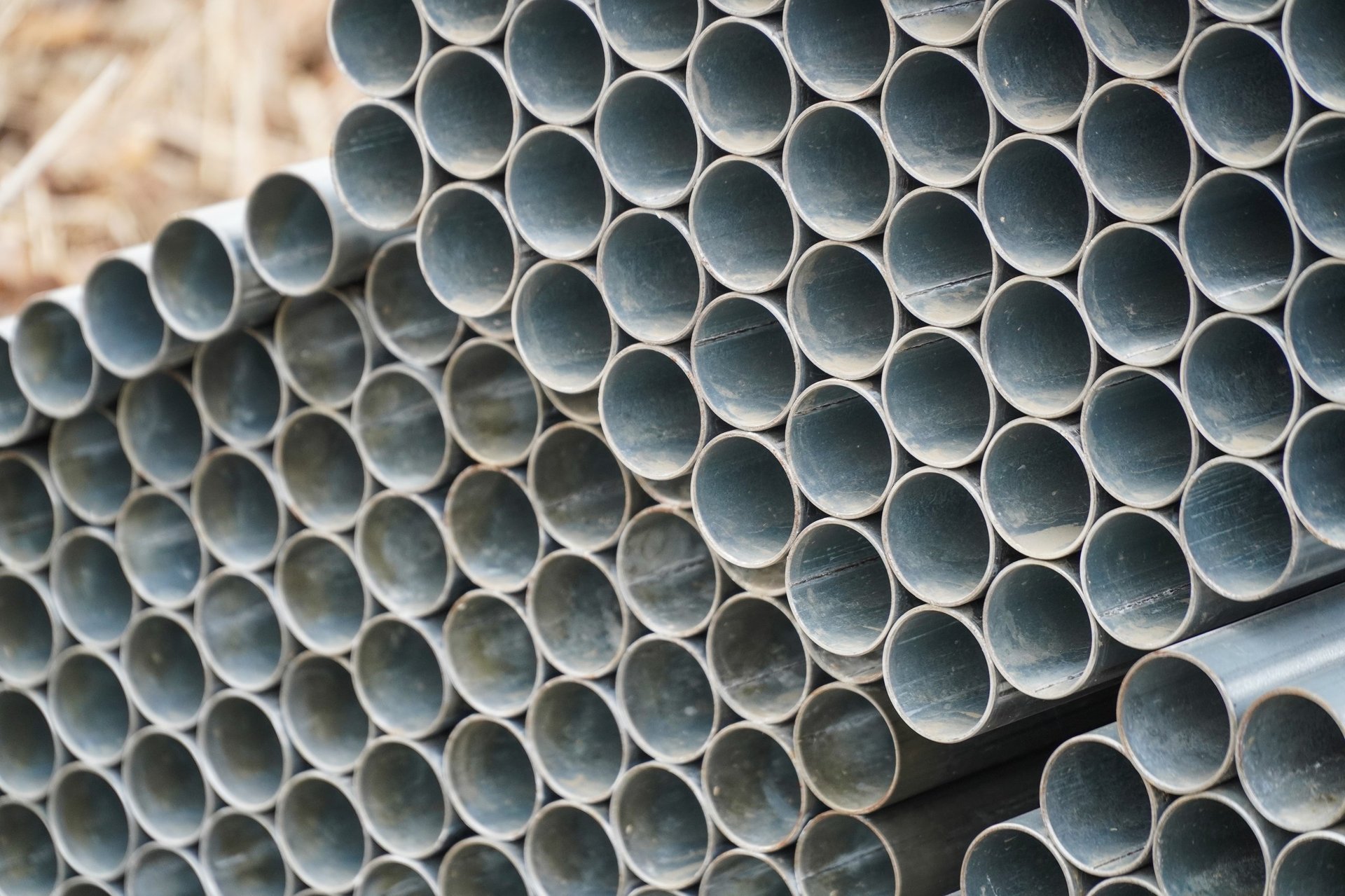
Why a single chart cannot exist
A lap length depends on the interaction between the bar and the concrete around it. Change the concrete the bar sits in and the answer moves. Change how much transverse reinforcement crosses the splice and it moves again. Move the same bar from a well-covered slab into a congested beam cage and it moves a third time — without the bar itself changing at all.
Each design code expresses those interactions through its own coefficients and conditions, and revises them between editions. So a figure that is correct under one code, in one situation, is not a benchmark for another — and presenting one as though it were is how a splice detail ends up shorter than the design intended.
Lap Dependency Checker
Establish whether a lap length can be derived — not what it is
This checker has one job: to tell you whether the inputs a defensible lap length depends on have actually been settled. It will not compute a value under any combination of answers. Where something is missing it says so plainly, because an incomplete input set is the real risk, not an approximate answer.
Code and material inputs
Nothing is submitted. Clear the form at any time.
What this checker will never do
- It will not output a lap length, a multiple of diameter, or a table of values under any combination of answers.
- It will not apply a default formula, because there is no default formula that is generally valid.
- It will not resolve an unknown on your behalf by substituting a common assumption.
- It will not treat a complete input set as a design approval — the derivation still belongs to the engineer of record.
Not enough information to assess this splice
This checker does not produce a lap length — it establishes whether the inputs needed for one are in place. Answer every dependency above, or the assessment has no meaning.
Derivation record
A blank record for the inputs behind a lap length, so a reviewer can reproduce the derivation rather than repeat it. The value line is intentionally empty.
Rebar splice — lap length derivation record
Adopted design code: Select the adopted design code…
Code edition:
Bar surface condition: Select the bar surface condition…
Bar position classification: Select the bar position…
Splice condition: General
Concrete grade applicable to this element:
Derived lap length (by design engineer of record):
Element and drawing reference:
Bar diameter and mark:
Transverse reinforcement across the lap:
Reviewer and date:

Not a design output. This record captures the inputs behind a lap length; the value itself must be derived under the project's adopted code and edition.
Inputs by Stage
Which of these you can fix now, and which only settle later
The eight inputs do not arrive together. Some are fixed the moment the project adopts a design code; others are only settled once the detail is drawn. Knowing which is which tells you what can go into a bar schedule today and what has to remain open.
Can be recorded now
Fixed before detailing begins
- Adopted design code and its edition — set by the project specification
- The reinforcement standard and grade named on the drawings
- Whether a coated or galvanized surface applies to the element
If any of these are still open, the bar schedule cannot be finalised — they change every downstream splice.
Needs the element design
Settled during design of the element
- Concrete strength applicable to the element being detailed
- Cover and clear spacing at the splice location
- The type of stress the splice carries, including any ductility demand
These sit with the design engineer for that element. They are not available from the general arrangement drawings alone.
Last to close
Only confirmed once the detail is drawn
- Whether transverse reinforcement genuinely crosses the lap
- Casting position as classified by the code's own definition
- Whether staggering or congestion forces a revised detail
These often drive the final lap value and are the inputs most frequently assumed rather than verified. Assuming them is where details go wrong.
Where the value belongs once it is derived
A derived lap length is only useful if it is attached to the detail it applies to. The same diameter can legitimately carry different lap lengths in different elements of the same structure, so a project-wide figure is not a simplification — it is a different, and usually wrong, statement.
Recording the value against the element, the bar mark and the drawing reference keeps the derivation reproducible. It also means that when a bar schedule is revised, it is possible to see which splice decisions were affected rather than re-deriving the whole schedule.
Recording & Handoff
What the supplier needs, and what is not the supplier's to decide
A reinforcement supplier works to a bar schedule. Understanding where the lap decision sits makes the enquiry cleaner — and makes it obvious which questions should never be routed to a supplier at all.
Belongs on the enquiry
- Element and drawing reference
- So every line on the enquiry can be traced back to the detail it serves.
- Standard, grade and surface condition
- The bar you are buying, stated exactly as the drawings name it — including any coating.
- Bar marks with diameter, shape and length
- The cut-and-bent schedule. The lap length is already inside the drawn shape; the supplier reproduces it, not derives it.
- Quantity per mark and total
- The basis for weight and price, whether firm or estimated.
- Delivery sequence and call-off
- Which element each consignment serves, and when.
- Documentation required
- The certificate set and any third-party verification, stated up front.
Does not belong on the enquiry
These are design decisions. A supplier who answers them is supplying a design opinion that carries no design responsibility — which is worse than no answer at all.
- "What lap length should I use?"
- The lap length is derived under the project's adopted code by the engineer of record. A supplier's figure cannot satisfy that derivation.
- "Can we shorten the lap to fit?"
- A bar that will not fit is a detailing problem, resolved through the detailer and the design engineer — not adjusted on site or by the supplier.
- "Is this coating equivalent to that one?"
- Coating system substitution is a durability decision with an exposure classification behind it.
- "Can you supply to a different standard?"
- Standards and grade designations are not interchangeable. Any change is a design change requiring approval, not a supply option.
Technical reference
Lap and anchorage rules live in the reinforced-concrete design code adopted by the project — ACI 318, EN 1992 (Eurocode 2), BS 8110 and IS 456 among the commonly adopted authorities in the region — each with its own coefficients, conditions and definitions, and each revised between editions. The reinforcement itself is supplied to a separate reinforcement standard, such as BS 4449, ASTM A615/A615M or A706/A706M, which fixes grade designations, mechanical properties, rib geometry and test regime. The two are related but distinct: the reinforcement standard describes the bar that arrives, while the design code determines the splice length for the bar in its particular situation. Confirm both, with editions, before any splice length is relied upon.
Nothing on this page substitutes for that derivation, and no value on this page should be used as a starting point for one.

Diameters commonly specified in GCC reinforcement schedules
Lap requirements are derived per diameter rather than carried across, so the bar being detailed matters even before the code is applied.
GCC Supply
Reinforcement supply across the GCC
Codes adopted across the region differ, and a supplier working to a bar schedule needs the standard and grade named on that schedule rather than a regional assumption. Start from the market the project sits in.

United Arab Emirates
Commercial and infrastructure
Schedule-based supply to the standard and grade named on the drawings, with documentation confirmed at enquiry.
Reinforcement supply for United Arab Emirates
Saudi Arabia
Large programme supply
Multi-element schedules where cut-and-bent accuracy and delivery sequencing carry as much weight as the material scope.
Reinforcement supply for Saudi Arabia
Qatar
Structures and marine works
Schedules where the durability specification adds surface-condition requirements on top of the reinforcement standard.
Reinforcement supply for Qatar
Kuwait
Buildings and civil works
Reinforcement to the schedule, with bar marks and quantities reconciled before despatch.
Reinforcement supply for Kuwait
Bahrain
Commercial and marine
Supply where coating and surface condition frequently sit alongside the base bar requirement.
Reinforcement supply for Bahrain
Oman
Infrastructure and industrial
Schedule supply with delivery route and receiving point agreed at enquiry stage.
Reinforcement supply for OmanRequest a Quote
Send the bar schedule — the splices are already in it
Once a splice detail is drawn, the lap length is expressed in the shape and length of the bar. A supplier reproduces that schedule; the derivation behind it stays with the design engineer. If the schedule is ready, so is the enquiry.
Include with your enquiry
- Element and drawing reference
- Governing standard and edition
- Grade and surface condition
- Bar schedule with marks and diameters
- Cut-and-bent shapes and lengths
- Quantity per mark
- Delivery sequence and call-off
- Required certificates and inspection
Prefer email? Send the schedule to sales@noordeirasteel.ae.
Contact Commercial Department
- +971 56 398 0860
- Office 3303, Churchill Executive Tower, Business Bay, Dubai, United Arab Emirates
- Monday – Saturday: 8.00 AM – 6.00 PM · Sunday: Closed
All pricing is provided on request against a confirmed schedule and specification.
Where to go next
Still resolving the splice?
If the code, edition or one of the element inputs is still open, work the detail through the dependency checker above first. It will tell you exactly which input is blocking the derivation, so the question goes to the right person rather than to a supplier.