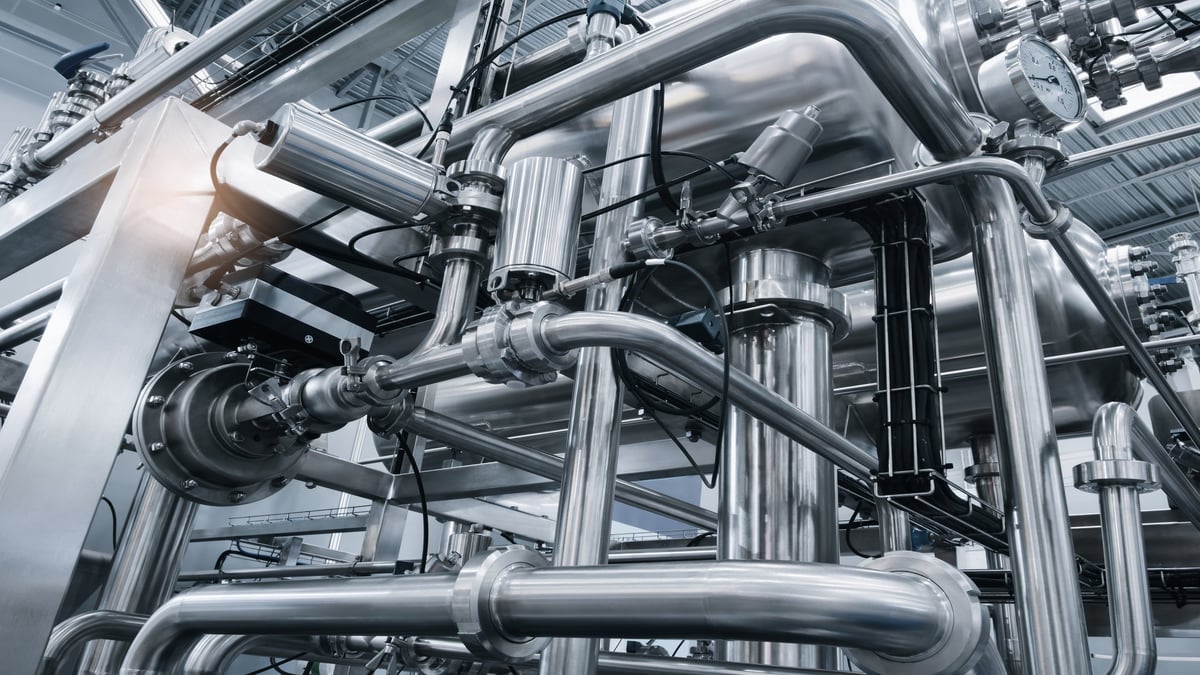
High-temperature pipe · ASTM A335 P22

ASTM A335 P22 Pipe

A335 P22 is a chromium-molybdenum alloy pipe for high-temperature service, and its procurement carries a handoff that a plain material purchase does not: the pipe has to satisfy the material specification, while the joints welded from it have to satisfy the construction code. Two documents, two jobs. The worksheet below separates them, so you can see which half of the decision is covered and which is still open before the enquiry reaches the desk.

Price on request. We publish no PWHT parameters, inspection acceptance levels or interchangeability claims — those follow the governing material specification and your project's construction code, and are confirmed against the requirement you state.

Material code

A335 edition — what the pipe itself must be.

Construction code

What the joints must show after welding.

Delivered condition

The heat-treated state the fabricator starts from.

Weld QA handoff

Records that must move from order to fabrication.

Heat-treatment and weld QA worksheet

Six items, split across the two documents that govern a P22 order

P22 is where a material decision and a construction decision meet. Three of these items belong to the material specification, which says what the pipe must be; three belong to the construction code, which says what the joints must demonstrate. The worksheet reports which half is covered and which is still open — it deliberately will not state a PWHT parameter or an inspection acceptance level, because both are outputs of the governing documents.

Design temperature, pressure and service Required

What temperature and pressure does the line run at, and what is it carrying?

Temperature
Service
Which document answers this

Dashboarded from your process design basis, not from the pipe standard.

The grade choice starts here. P22 is selected for a particular part of the high-temperature range, and the design code reads temperature and pressure together to establish what the pipe and the joint have to be qualified for. Without both stated, no one can confirm that P22 is where your duty actually sits.

The material specification and its edition Required

Which edition of A335 is your project working to for this grade?

Edition
Which document answers this

The material specification — it says what the pipe must be.

The material specification governs the pipe itself: the grade, the chemistry and mechanics the certificate demonstrates, the test provisions and the marking. Editions move, so naming the edition is what makes two suppliers' prices describe the same deliverable. This is the first of the two codes that shape a P22 order, and it is the one buyers most often leave unstated.

The construction code your fabrication is governed by Required

Which construction code applies to the welding, examination and treatment of this pipework?

Code
Which document answers this

The construction code — it says how the pipe is built and joined.

This is the second code, and the one that separates a P22 decision from a plain material purchase. The material specification says what the pipe must be; the construction code says how the joint is to be welded, examined and heat-treated, and it is the document behind every weld-QA answer your fabricator will give. Naming it lets the documentation plan be built around the right rules from the start rather than corrected later.

The heat-treated condition the pipe is supplied in Required

What delivery condition and test package must the material order carry?

Condition
Tests
Which document answers this

The material specification and your project specification, written onto the order.

Alloy pipe for high-temperature service is supplied in a specified heat-treated condition, and the test package — mechanical, chemical, hardness and any supplementary testing your project adds — is fixed by the order and the governing edition. This is the input the fabricator builds their procedure and treatment plan from, so it belongs on the material order, not discovered on site.

How the joints will be welded, examined and treated Required

What does the fabrication scope require of the weld procedure, the examination and the treatment after welding?

Scope
Planning
Which document answers this

The construction code, applied by the fabricator's qualified procedures.

On a P22 joint the welding procedure, the examination method and the post-weld treatment are planned together, and all three follow from the construction code rather than from the grade name. This is normally the fabricator's scope, but flagging it at enquiry is what lets the material documentation — chemistry, hardness, heat identity — be specified to support it, instead of the fabricator finding out on the shop floor that a record they need was never ordered.

The records that must travel to the fabricator

Which records does the project require to move from the material order to the fabrication?

Records
Which document answers this

The project specification's documentation requirement, read against both codes.

The heart of the P22 QA handoff is that the records must move: the heat-treated condition, the test results and the heat identity on the material certificate have to reach the fabricator before they can qualify a procedure and plan the treatment behind it. Ordering the documents is not the same as briefing the handoff, so this input makes the transfer explicit.

Cannot be reviewed

Five worksheet items must be stated before this enquiry can be reviewed

The service envelope, the material specification edition, the construction code, the delivery condition and the weld and treatment route decide everything downstream. This worksheet reports which half of the decision — material or construction — is covered, and it will not state a PWHT parameter or an inspection acceptance level for you, because both are outputs of the governing documents.

  • Service envelope: design temperature, pressure or service not stated — the grade basis is undetermined
  • Material spec & edition: material specification edition not declared — quotations may not describe the same product
  • Construction code: construction code not named — the weld and treatment basis cannot be planned
  • Delivery condition: delivery condition or test package undefined — the fabricator's starting input is missing
  • Weld & treatment route: welding and treatment route not stated — the joint QA chain is unplanned
  • Handoff documents: document handoff not stated — the fabricator may not receive the records they need

0 of 6 items stated. The worksheet confirms the inputs exist — it never asserts a treatment parameter, an inspection level or a weld procedure, because each of those is an output of the governing documents.

Worksheet record

ASTM A335 P22 pipe — heat-treatment & weld QA worksheet

Service envelope: [REQUIRED — NOT STATED]
Material spec & edition: [REQUIRED — NOT STATED]
Construction code: [REQUIRED — NOT STATED]
Delivery condition: [REQUIRED — NOT STATED]
Weld & treatment route: [REQUIRED — NOT STATED]
Handoff documents: [open — to be supplied]

Supplier: Noor Deira Steel Trading L.L.C. — sales@noordeirasteel.ae — office +971 56 398 0860
Material specification edition, construction code, delivered condition and acceptance criteria to be confirmed at quotation.

The worksheet is a handoff tool, not a fabrication plan. It shows where the two governing documents divide the work on a P22 order — so that when the desk and your fabricator talk, both are looking at the same split between what the pipe must be and what the joint must demonstrate.

Where P22 sits in the A335 family

Choosing P22 is a metallurgy decision, not a matter of picking the middle grade

P11, P22 and P91 are covered by one specification, which tempts buyers to read them as a simple scale. They are not. Each grade sits at its own point in the high-temperature range with its own balance of alloying, and that balance is what drives the welding procedure, the treatment after welding and the inspection the joint receives.

P11

A lower-alloy grade

A chromium-molybdenum grade used across a lower part of the high-temperature range. Reaching for it where P22 is specified is a design substitution, not a like-for-like sourcing swap.

Do not move to P11 to ease sourcing — it changes the metallurgical basis.
P22

This grade

A chromium-molybdenum grade selected for its own part of the high-temperature range, and the one that brings the material-and-construction handoff to the fore. The delivered condition and the weld QA route are the inputs that shape a P22 order.

Confirm P22 came from your design basis, with both governing codes named.

P91

A higher-alloy grade

A considerably higher-alloy grade within the same specification, with its own fabrication controls and heat-treatment discipline. It is a different design route entirely, not the next step up the same ladder.

A higher-alloy grade is never a drop-in for P22 — the joint rules differ.

A reasonable fit when

  • The design basis names A335 P22 for a high-temperature service, with temperature and pressure stated.
  • Both governing documents are named — the material specification edition and the construction code.
  • The delivered heat-treated condition and the test package are written onto the material order.
  • The welding, examination and treatment route is planned with the fabricator before the order is placed.

Revisit the basis when

  • The grade was chosen for availability rather than from the design basis — P11 or P91 suit different duties.
  • Only one code was named, leaving either the material or the construction side unplanned.
  • The weld QA route was assumed to work like ordinary carbon pipe, ignoring the alloy's own treatment needs.
  • The document handoff from material order to fabrication was never made explicit.

Read the neighbouring grades against your own basis before you settle this one — A335 P11 and A335 P91 are separate design routes rather than rungs on one scale, and the A335 alloy pipe specification is where the whole family is organised.

The two documents behind a P22 order

One code says what the pipe must be. The other says what the joint must show.

This is the idea that separates a P22 purchase from a plain material order, and the one that most often goes unspoken on a requisition. Get the split clear at enquiry and the weld QA chain stays intact all the way to fabrication.

Document one

The material specification

What the pipe itself must be.

  • The grade and the permitted chemistry and mechanics it demonstrates
  • The delivery condition — how the pipe is supplied after heat treatment
  • The tests and the certificate the material order carries
  • The marking and heat identity that travel with the pipe

Read by the mill and the buyer. It answers what arrives on the truck.

Document two

The construction code

How the pipe is welded, examined and treated.

  • The weld procedure that has to be qualified for the joint
  • The examination method and the acceptance it is judged against
  • The post-weld heat treatment the joint calls for
  • The records the fabrication has to produce and keep

Applied by the fabricator. It answers what the finished pipework must demonstrate.

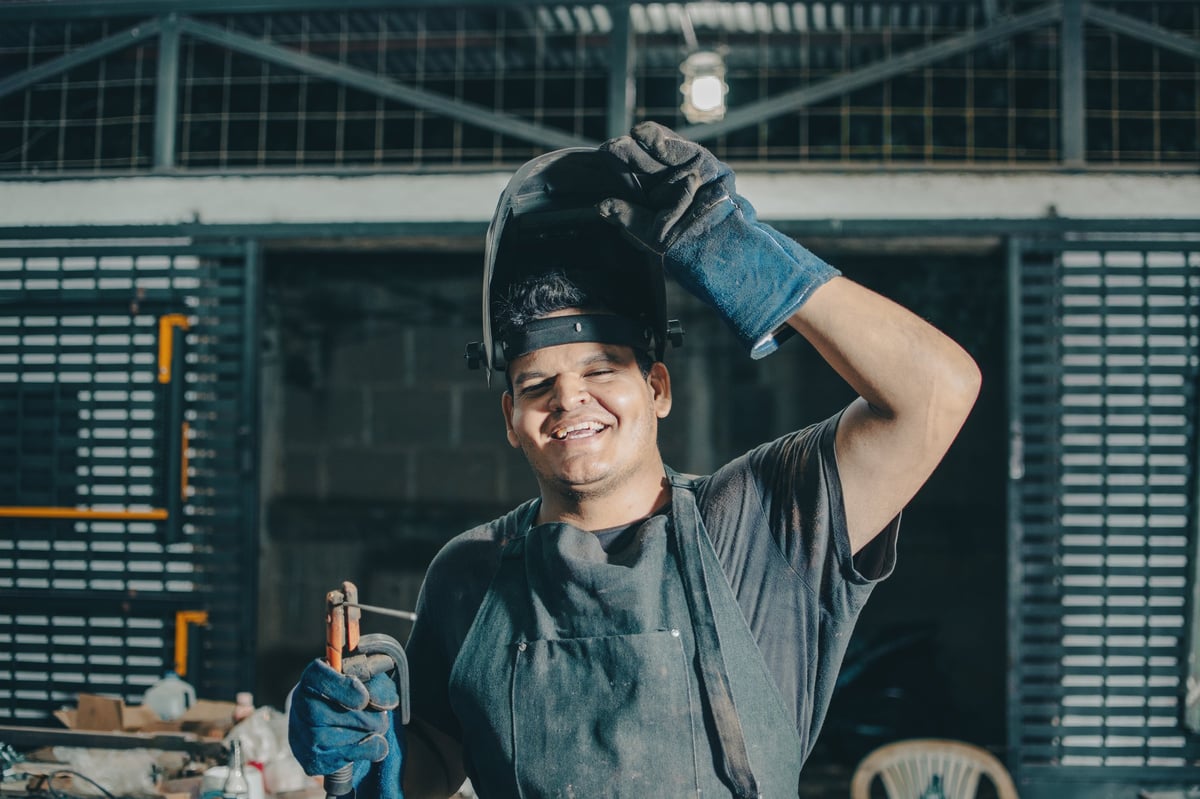
Welder preparing an alloy steel joint in a fabrication workshop
The joint is where the two documents meet. The material certificate tells the fabricator what the pipe is; the construction code tells them what the weld they make from it has to show.

Why the handoff is the whole point

On a carbon pipe order the two documents rarely pull apart, because there is little in the material that changes what the joint needs. On P22 the alloy content and the heat treatment make the joint a genuine engineering step: the fabricator cannot qualify a procedure or plan the treatment behind it without first knowing the delivered condition, the chemistry and the heat identity of the pipe. Those are material-order outputs, and they only arrive if the order was written to produce them.

That is why we ask for both codes on a P22 enquiry rather than just the grade. Not to take over a fabrication decision, but to make sure the documentation you need is specified on the material side, where it has to be ordered — rather than discovered on the shop floor, where it cannot be created.

We publish no PWHT temperature, holding time or inspection acceptance level for this grade. Those are outputs of the construction code and the material specification applied to your joint, and they are confirmed against the requirement you state.

GCC markets

Where a P22 high-temperature order is coordinated

Destination changes the commercial and documentary side of the order, not the acceptance basis. Choose the market to see what each destination expects before the consignment is released.

These market pages are procurement destinations, not a claim of premises in each country. Supply is coordinated from Dubai and delivered against the destination and delivery date you state.

Compare and verify

The standards buyers weigh alongside a P22 requirement

An alloy grade is frequently specified where a carbon specification was actually meant, or the reverse. These are the neighbouring standards worth checking — together with the references that help you settle the order before it reaches the desk.

Industrial alloy pipework network relevant to high-temperature service and grade selection
Temperature and pressure are read together with the design code to establish what a high-temperature pipe and its joints have to be qualified for — which is why both belong on the enquiry rather than one alone.

Comparing across a standard family

A designation from one family is not an interchangeable part for a designation in another, and within the alloy family the grades are not tiers of one product either. Moving between them changes the alloy content, and with it the welding procedure, the treatment after welding and what the certificate has to demonstrate — so it has to be re-confirmed against your design basis rather than carried across from a grade name on an old requisition.

Where the requirement is a steel tube rather than a pipe, or the standard family is still open, check the product form first — the dimensional and standard basis changes with it, and so does what the certificate has to demonstrate.

Destination matters commercially on an alloy order — the UAE market page sets out how project coordination and release documents are handled locally, which is worth reading before you fix the delivery basis.

From worksheet to offer

How a completed P22 worksheet becomes a firm quotation

The worksheet settles what the pipe must be and what the joint must show. This is the sequence that turns it into a comparable offer, and the point at which each piece of the two-code handoff is actually tested.

  1. Service envelope stated

    Design authority

    The temperature, pressure and service the line runs at are on the enquiry.

    Without them the grade choice cannot be judged.

  2. Material spec and edition named

    Buyer

    A335 P22, in a named product form, against a stated edition of the specification.

    An unstated edition makes quotations incomparable.

  3. Construction code named

    Buyer and fabricator

    The code governing welding, examination and treatment is on the enquiry.

    Without it the weld QA chain has no governing rule.

  4. Condition and tests fixed

    Buyer and commercial desk

    The delivered heat-treated condition and the material test package are agreed.

    The fabricator cannot plan a procedure from an unstated condition.

  5. Weld QA handoff planned

    Buyer, desk and fabricator

    The records that must move from material order to fabrication are named.

    A record not ordered on the material side cannot be created later.

  6. Offer with commercial terms

    Commercial desk

    Availability, price, quantity and delivery confirmed on request.

    Commercial variables stay open until you supply them.

Send the completed worksheet and the desk comes back against your requirement rather than a standard package. Reachable Monday to Saturday, 8.00 AM to 6.00 PM Gulf time.

Request a Quote

Straight answers

The questions that come up on a P22 alloy pipe enquiry

These are the ones the desk fields most often from high-temperature process piping engineers, answered the way they are answered there — including the parts that make the process slower.

01"Can we substitute P11 or P91 if P22 is hard to source?"

Not as a sourcing convenience. They are separate grades within one specification, chosen for their own design reasons, and moving between them changes the alloy content along with the welding procedure, the treatment after welding and what the certificate has to demonstrate. If a substitute grade is acceptable to your design, that belongs to whoever owns the design basis, and it should reach us as the grade you now want. We will quote what your requirement states rather than quietly offering a different grade because it is easier to find.

02"Who owns the post-weld heat treatment?"

The treatment of a welded joint follows from the construction code, applied to the grade, the wall thickness and the specific joint, and it is normally performed by the fabricator who makes the weld, against a procedure qualified for that work. What sits with us is the condition the pipe is supplied in and the documentation it carries — the inputs the fabricator cannot plan without. If your scope includes welded assemblies, say so on the enquiry and the treatment basis can be discussed against the construction code you are working to. We will not hand you a PWHT temperature as if it were a catalogue figure.

03"Isn't P22 just a stronger version of P11?"

No — that framing is what gets a requisition into trouble. P22 is not a strength upgrade on P11; it is a different balance of alloying selected for its own part of the high-temperature range. Choosing between them is a metallurgy and design decision, and the joint rules move with it. Reading the family as a plain scale tempts buyers to swap grades for convenience, which is exactly the substitution the material and construction documents are there to prevent.

04"Why do you ask for the construction code on a material enquiry?"

Because on P22 the material order has to produce the records the fabrication depends on. The construction code is what tells your fabricator how the joint is welded, examined and treated, and those decisions set what the material certificate has to contain — the chemistry, the hardness, the delivered condition, the heat identity. If we only know the grade, we can quote pipe; if we know both codes, we can make sure the documentation you need is written onto the material order where it can still be specified.

05"What does the test package actually include?"

It includes what your material order and the governing specification edition call for, plus any supplementary testing your project adds — and the honest answer is that the package is defined by those documents, not by a default list we would publish on a page. What we can commit to is that the testing written onto the order is the testing performed and evidenced, and that the results travel with the heat identity so they can be tied to your pipe and handed to the fabricator.

06"Do you hold P22 in stock now?"

We do not publish stock positions on this page, because a figure written here would be stale by the time it mattered and availability at this grade varies with diameter, wall, product form and test package. It is confirmed against your stated basis, quantity and required date when the enquiry reaches the desk. That is the honest sequence — the answer you plan around is the one given for your order.

Frequently asked questions

ASTM A335 P22 — the questions that shape the order

Five questions high-temperature process piping engineers raise most often, answered without deferring the technical position to the quotation stage.

Is A335 P22 interchangeable with P11 or P91?

They are separate grades within the same specification, not tiers of one product, and none is an automatic substitute for another. P22 sits at its own point in the high-temperature range, drawing on a different balance of alloying than P11 or P91. Moving between them changes the welding procedure, the heat treatment that follows welding and the inspection the joint receives, so the grade has to come from your design basis rather than from what happens to be available. If a different grade is acceptable to your design, that is a decision for whoever owns the basis, and it should be written onto the requirement as the grade you now want.

What post-weld heat treatment does P22 need?

We do not publish a PWHT temperature, time or heating rate, because those are engineering outputs rather than catalogue figures. They are established by the governing construction code, the material specification edition, the wall thickness and the specific joint — and the two codes in play, the material specification and the construction code, do different jobs that have to be read together. What we can tell you is the condition the pipe is supplied in and the documentation it carries, which is what a fabricator needs to plan the joint correctly. The treatment of a fabrication is normally performed by the fabricator against a procedure qualified for that work.

Why is the weld QA route different on P22 than on carbon pipe?

Because the alloy content and the heat treatment bring in failure modes that a general carbon pipe does not, and the construction code responds to them with its own inspection and treatment provisions for the joint. That is why the QA handoff matters more here: the fabricator needs the heat identity, the delivered condition and the material certificate to line up before they can qualify a weld procedure and plan the treatment behind it. Treating P22 as if it were ordinary carbon pipe is where the costly rework starts, and it shows up at the weld rather than on the requisition.

Which edition of A335 and which construction code do you quote against?

We quote against the edition your project is written to, and we ask for the construction code your fabrication is governed by at the same time. The two are separate documents — the material specification governs what the pipe has to be, the construction code governs how it is welded, examined and treated in service. Editions matter because the grades covered, the testing provisions and the marking requirements move between them, so two suppliers quoting 'A335 P22' against different editions may not be offering the same deliverable. If the edition is not stated we will say so rather than assume one and leave the comparison to chance.

Do you hold P22 in stock now?

We do not publish stock positions on this page, because a figure written here would be stale by the time it mattered and availability at this grade varies with diameter, wall, product form and test package. It is confirmed against your stated basis, quantity and required date when the enquiry reaches the commercial desk. That is the honest sequence — the answer you plan around is the one given for your order, not a headline figure on an enquiry page.

Still settling the basis?

Send the enquiry with what you have stated and flag what is still open. The desk will tell you which inputs it needs before it can price, rather than returning a number built on assumptions.

Noor Deira Steel Trading L.L.C.

Office 3303, Churchill Executive Tower, Business Bay, Dubai, United Arab Emirates · Monday to Saturday, 8.00 AM to 6.00 PM, Sunday closed.

+971 56 398 0860sales@noordeirasteel.ae

Request a quote

Send the worksheet, not just the grade

Complete the worksheet as far as your project allows and send it with your requirement. The commercial desk confirms availability, price and the testing and documentation scope from what you state — price on request.

What a P22 enquiry needs

The design temperature, pressure and service the line runs at

The grade confirmed as A335 P22

The governing edition of the material specification

The construction code governing welding, examination and treatment

Outside diameter, wall thickness and length

The product form — seamless or welded — if your spec fixes it

The delivered heat-treated condition and required test package

The documentation that must reach the fabricator

Quantity, delivery point and required date

Prefer to talk it through?